

In the crowded world of financial media, Benzinga has carved out a unique position. It is neither a traditional research platform nor a pure news website. Instead, it operates at the intersection of financial journalism, market intelligence, and trader-focused tools.
Founded in 2010, Benzinga has grown into one of the most widely used financial information platforms among retail traders. Its core value proposition is simple: deliver market-moving information as quickly as possible.
For some traders, that speed can be worth hundreds or even thousands of dollars. For others, it may not matter at all.
Benzinga Quick Facts
| Feature | Details |
| Founded | 2010 |
| Headquarters | Detroit, Michigan |
| Primary Focus | Financial News & Trading Tools |
| Best For | Active Traders |
| Free Version | Yes |
| Premium Product | Benzinga Pro |
| Real-Time News | Yes |
| Brokerage Services | No |
| Editor Rating | 7.5/10 |
What Benzinga Does Best
The platform’s greatest strength is real-time market coverage.
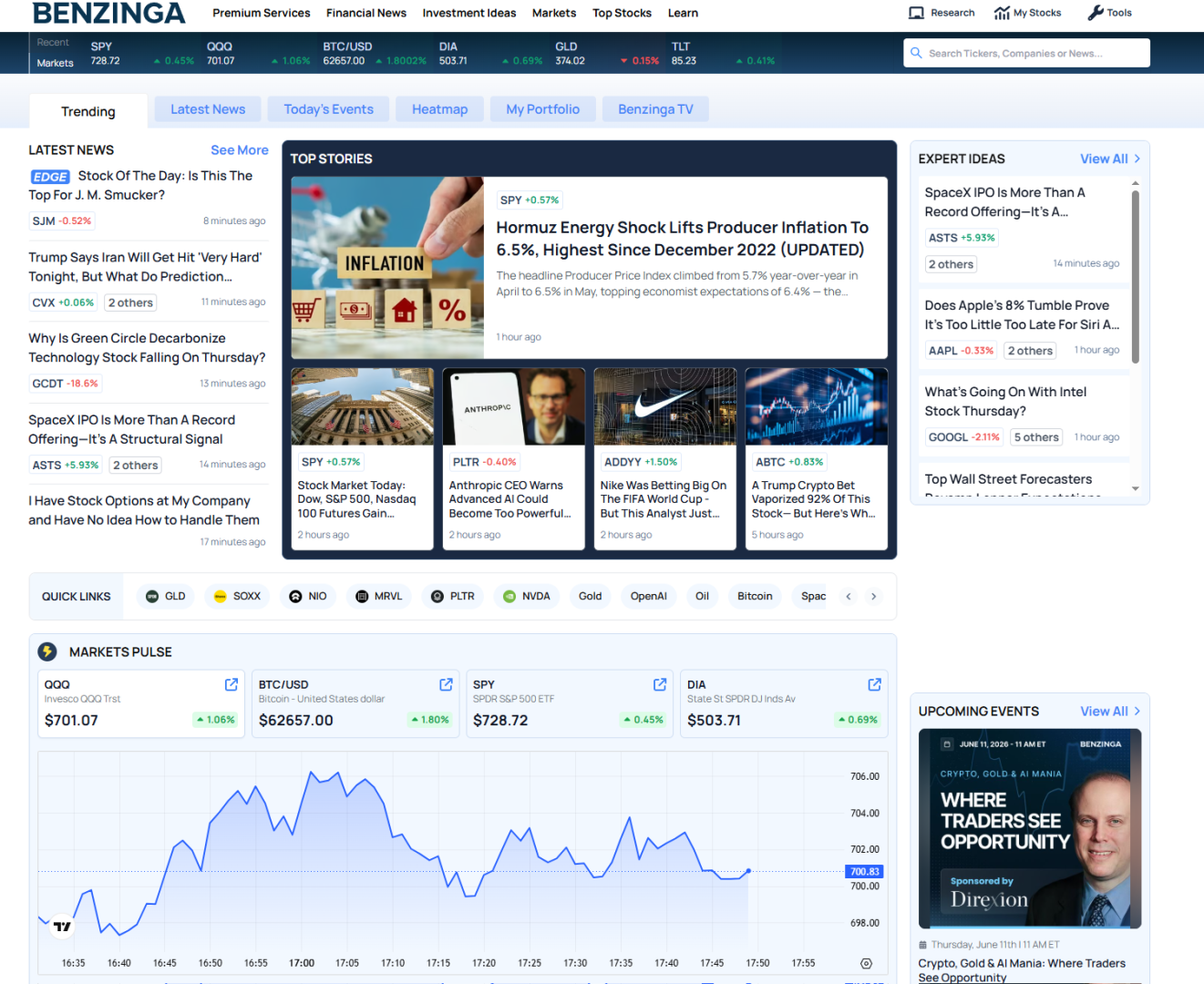
Unlike many financial websites that primarily aggregate content from larger news organizations, Benzinga operates its own newsroom and produces a significant amount of original market coverage. The result is a fast-moving news ecosystem focused on earnings reports, analyst actions, insider transactions, options activity, and breaking corporate developments.
The premium service, Benzinga Pro, takes this a step further with real-time news feeds, customizable alerts, scanners, and its well-known Audio Squawk feature, which reads important headlines live as they happen. Many active traders consider Squawk one of the platform’s most valuable tools.
The platform also provides useful data sets that are difficult to find in one place, including congressional trading disclosures, insider transactions, analyst ratings, earnings calendars, and unusual options activity.
Who Gets the Most Value?
Benzinga is clearly designed with active traders in mind.
Day traders, momentum traders, and news-driven swing traders are the audience most likely to benefit from the platform. The faster a trader reacts to information, the more valuable Benzinga becomes.
Many users describe Benzinga Pro as one of the closest retail alternatives to institutional news terminals, offering a level of speed that free financial websites often cannot match.
Long-term investors may see things differently.
If your strategy focuses on business fundamentals, valuation, or multi-year investment horizons, the platform’s emphasis on real-time information becomes less important. In that case, much of the free content may already provide everything you need.
Areas Where Benzinga Struggles
While the platform receives praise for speed, reviews reveal several recurring complaints.
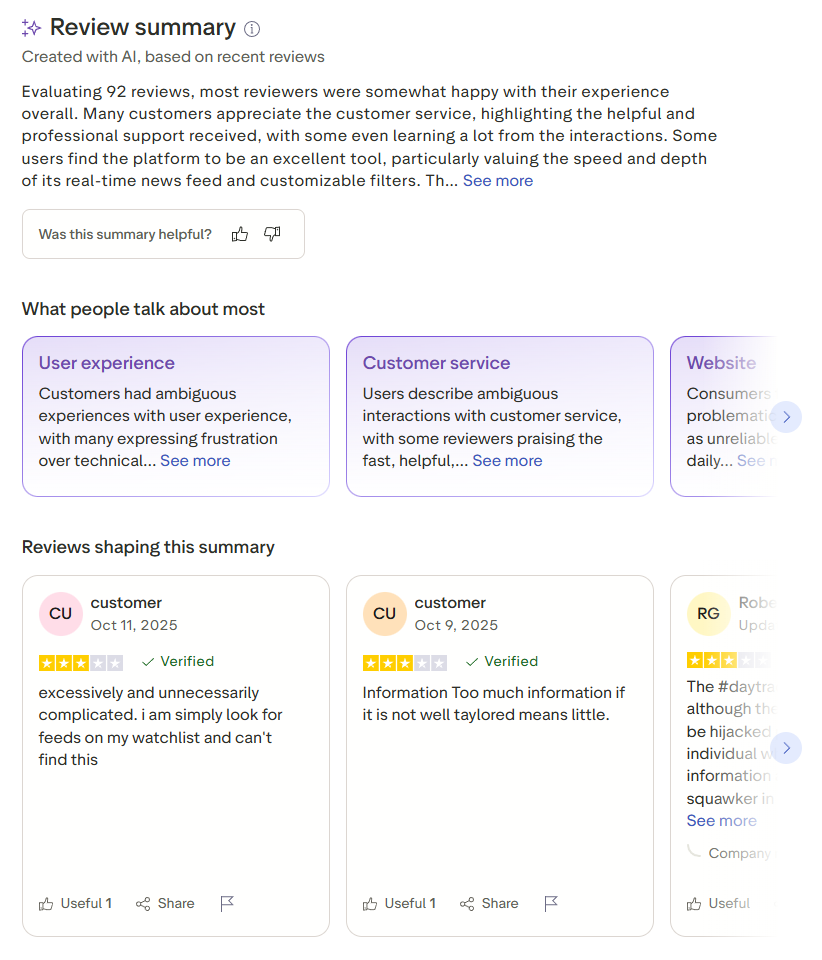
The most common criticism involves customer support and subscription management. User reviews frequently mention billing disputes, confusion around trial periods, refund requests, and aggressive upselling of additional products.
Another issue is complexity.
Benzinga Pro offers a large number of features, but some users find the interface overwhelming. New traders often report spending days learning the platform before becoming comfortable with its workflow.
Charting is another weak spot. While Benzinga includes charting functionality, it is generally not considered a replacement for dedicated technical analysis platforms such as TradingView. Users who rely heavily on indicators and advanced chart tools often use separate software.
What Users Say
One interesting pattern appears across reviews and trading communities.
Even many critics acknowledge the quality of Benzinga’s news feed and audio alerts. Complaints tend to focus on pricing, customer service, platform complexity, or technical issues rather than the speed of information itself.
Supporters argue that a single profitable trade generated from a timely headline can justify months of subscription costs. Critics counter that the platform can be expensive, noisy, and unnecessary for traders who do not depend on rapid news reactions.
Benzinga Final Verdict
Benzinga is best understood as a market intelligence platform rather than a traditional investment research service.
It does not specialize in deep macroeconomic analysis, long-form research, or detailed company valuations. Instead, it focuses on helping traders identify important information before the broader market fully reacts.
That makes it particularly useful for active traders and significantly less compelling for passive investors.
If your edge comes from speed, Benzinga deserves serious consideration. If your edge comes from patience and long-term analysis, the free version may be all you ever need.