Gulkarlife Broker Review

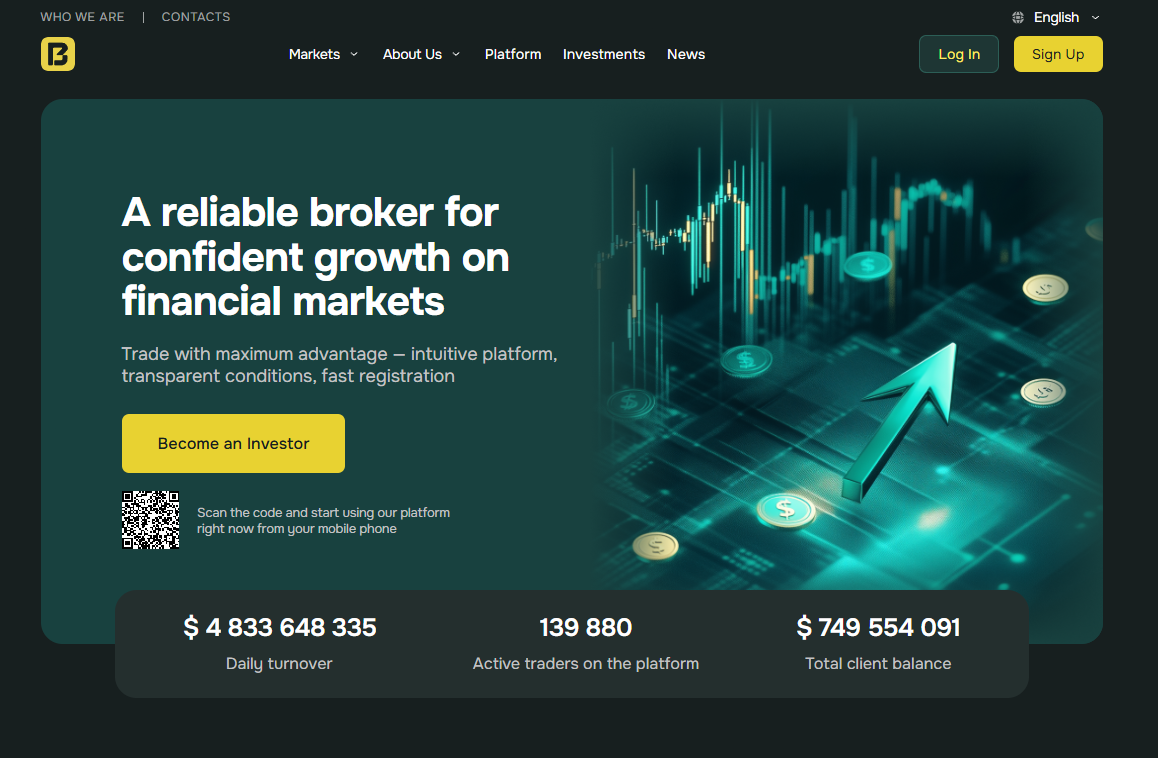
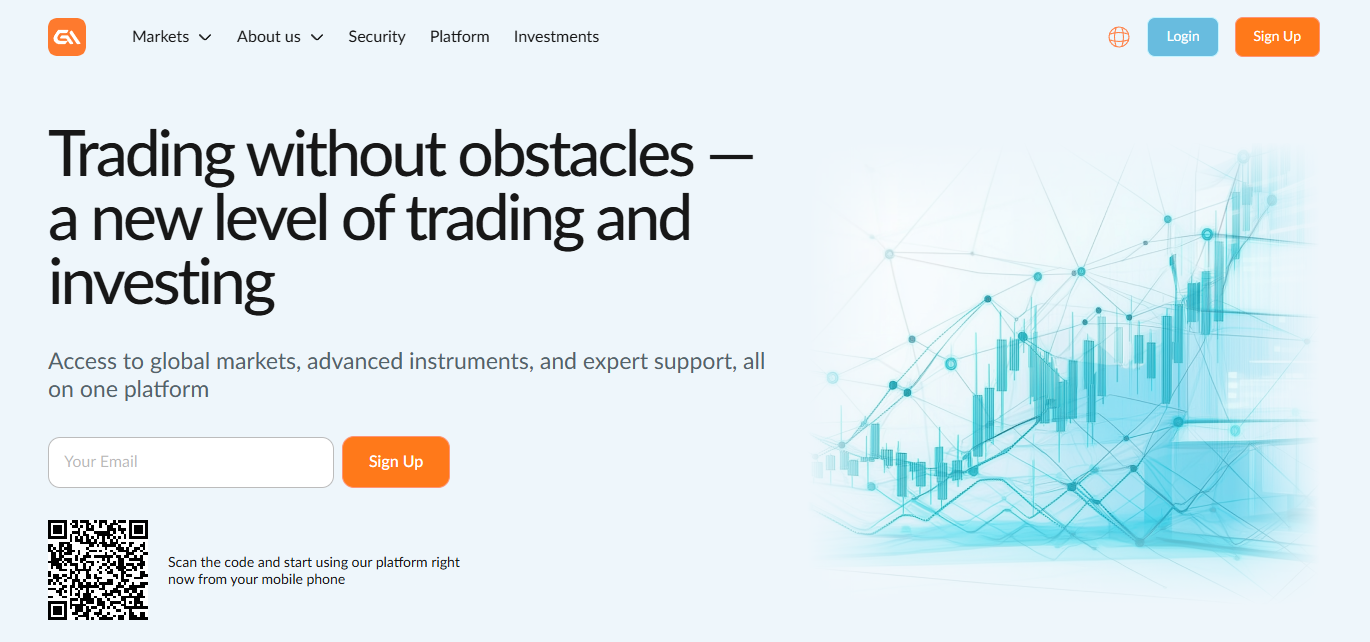
Gulkarlife is a trading platform that promotes itself as a global broker offering access to financial markets. It claims to provide advanced trading tools, professional support, and safe investment conditions. Despite this presentation, an in-depth review shows that the company operates without regulatory oversight and exhibits multiple indicators commonly associated with fraudulent brokers. This article examines the platform’s structure, legal status, user experience, and the risks involved.
Company Information

What Gulkarlife Says About Itself

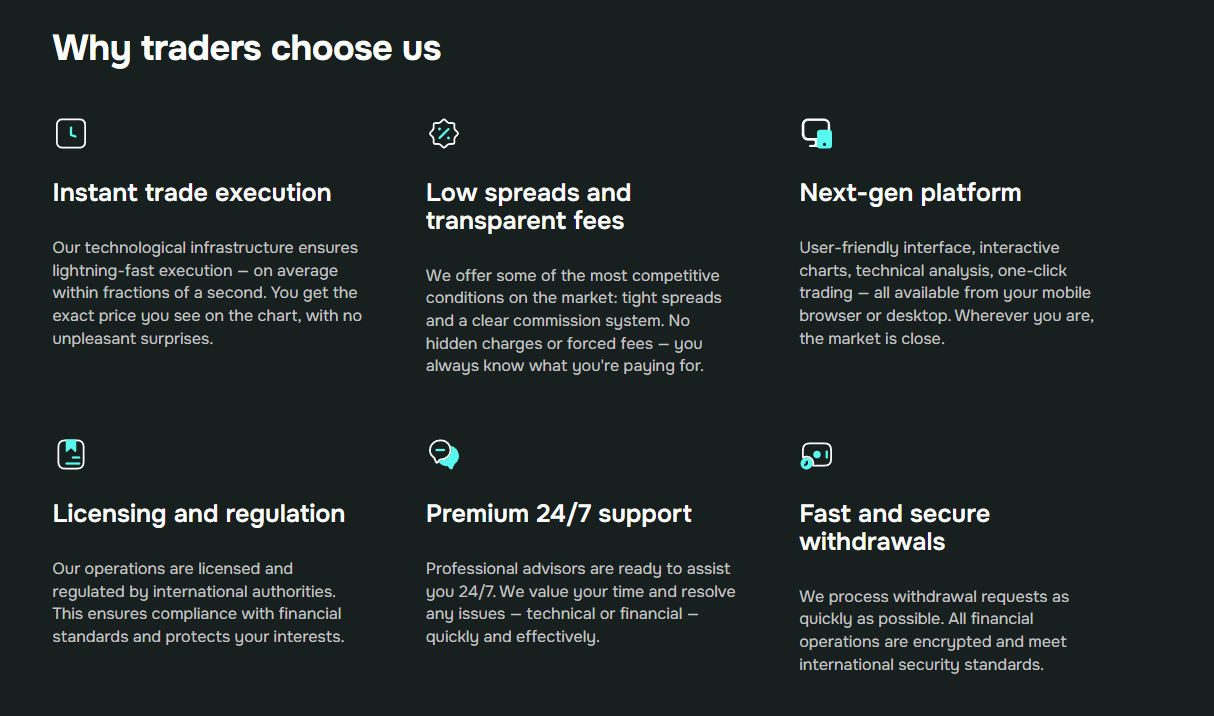
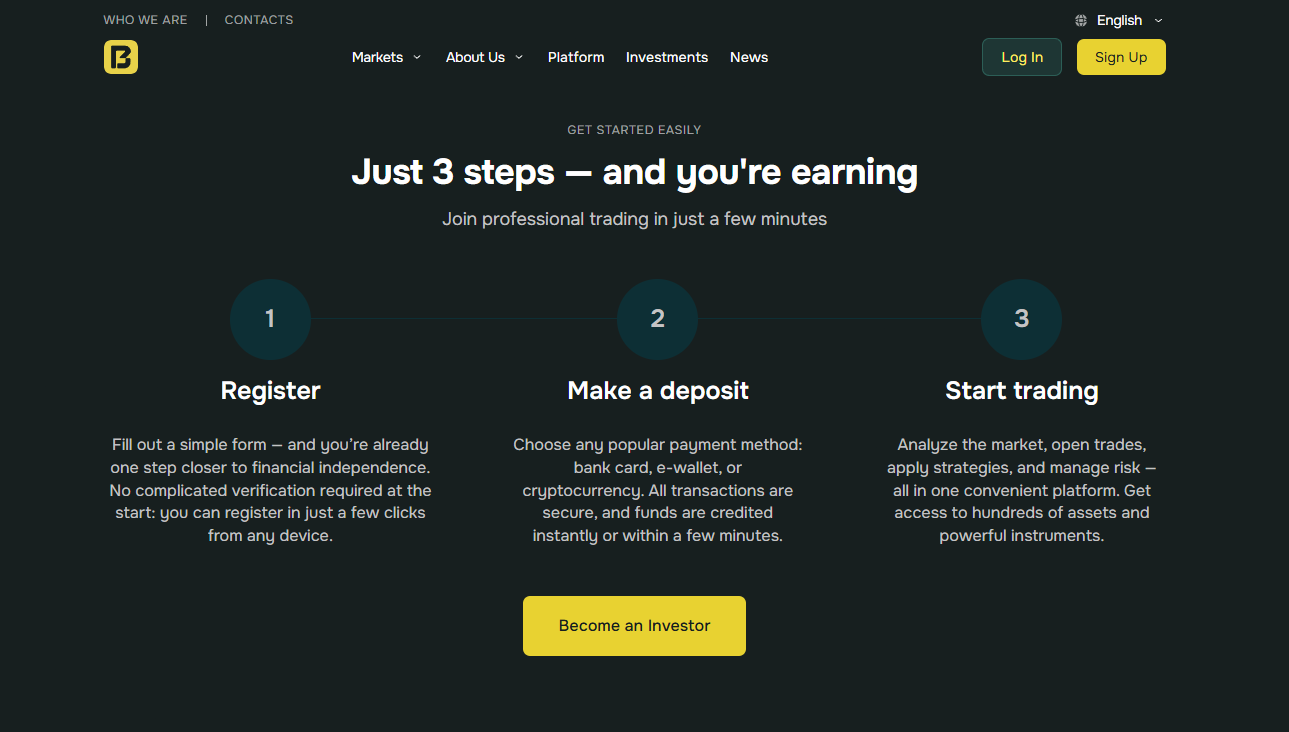
According to its website, Gulkarlife gives clients access to forex, stocks, commodities, and cryptocurrencies. The company advertises fast registration, personal assistance, and “high-quality trading conditions.” It also suggests having years of experience and a large customer base.

However, none of these statements are backed by evidence. The platform does not provide corporate details, ownership information, or any verifiable proof supporting its claims of long-term operation.

What the Facts Show

A review of public records reveals that:

  • Gulkarlife does not appear in the corporate registers of major financial jurisdictions.
  • The company does not disclose a registration number or legal entity.
  • The listed address and contact numbers do not correspond to a proven financial firm.
  • The domains used by the platform were created far later than the company claims.

The absence of traceable corporate information raises immediate concerns about the legitimacy of the project.

Regulation Status

No Valid License

Regulatory checks show that Gulkarlife is not licensed by any recognized financial authority. There is no record of the company being supervised by:

  • FCA
  • DFSA
  • CySEC
  • ASIC
  • CSSF
  • ESMA
  • or any offshore FSC-type regulator

This means Gulkarlife operates without legal permission to offer brokerage services. Trading with an unregulated broker exposes clients to significant risks, as the company is not obligated to meet financial standards or follow industry compliance rules.

Misleading Statements

The platform presents itself as a reputable brokerage but provides no regulatory certificates, no audit reports, and no compliance documents. The use of regulatory logos and vague references to licensing appears to be an attempt to create a false sense of credibility.

Website and Platform

Presentation

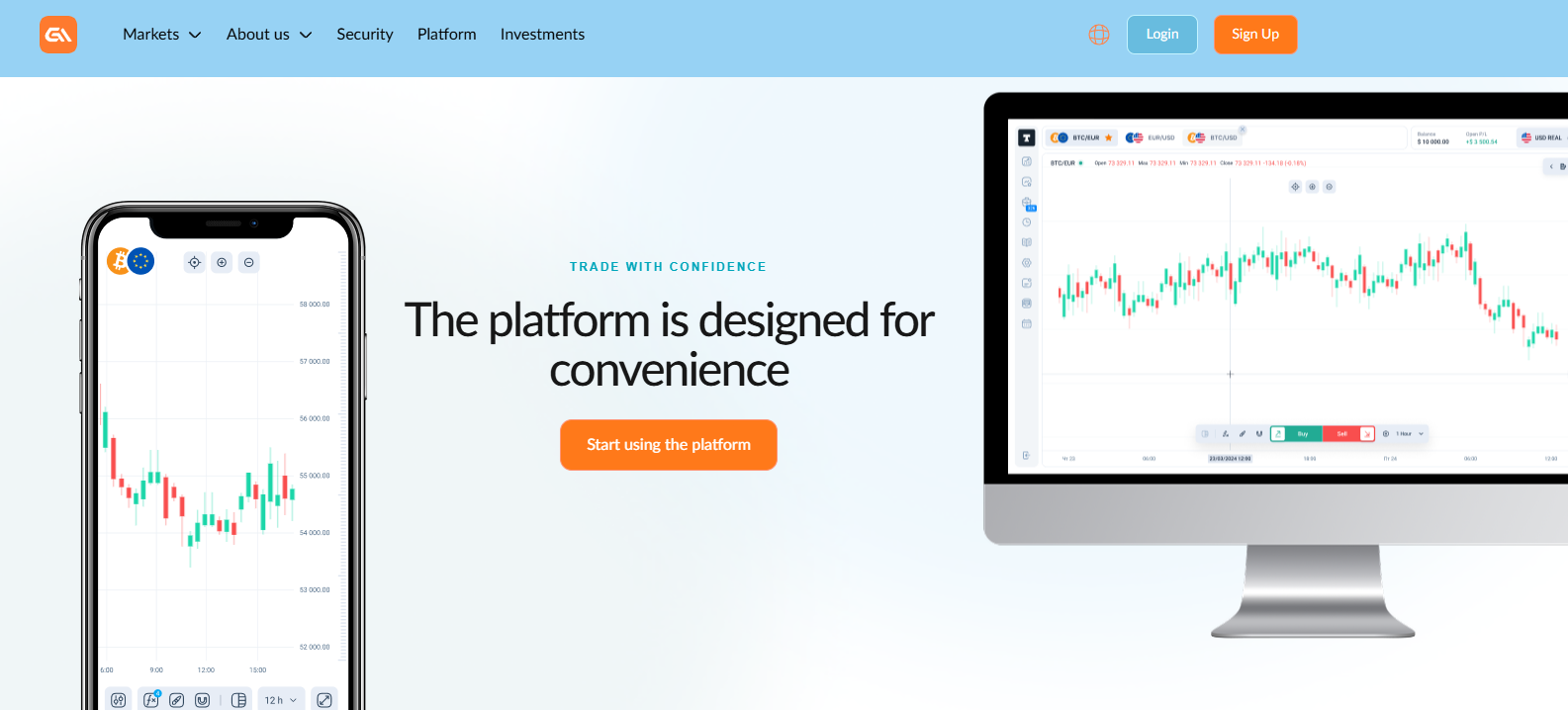
The Gulkarlife website is designed in a way that aims to imitate established brokers: modern graphics, promotional banners, a multi-section structure, and reassuring statements about safety and transparency.
What Is Missing

Despite this, the website lacks essential components of a real broker:

  • no information about liquidity providers;
  • no details about how trades are executed;
  • no data on segregated accounts;
  • no published Terms with clear legal identifiers;
  • no proper risk disclosure;
  • no open information about the team or management.

This combination suggests that the website is built for marketing purposes only, rather than to support legitimate trading operations.

How Gulkarlife Operates

Deposit Focus

User reports indicate that the platform prioritizes deposit collection over actual trading services. Representatives actively encourage clients to invest, often using aggressive communication tactics and promises of quick financial gains.

Simulated Activity

After clients deposit funds, the trading interface often displays profit growth. However, there is no proof that trades occur on real markets. The numbers shown on the screen appear to be controlled internally and do not correspond to verifiable execution data.

Withdrawal Issues

The most serious issue is the withdrawal process. Clients repeatedly report that:

  • withdrawal requests are stalled,
  • the company introduces new unexpected fees,
  • users are asked to pay supposed taxes or insurance charges,
  • support stops responding when clients refuse additional payments.

The inability to withdraw funds is one of the strongest indicators that a broker is operating dishonestly.

User Complaints

Common Problems

Across multiple independent platforms, users describe similar difficulties with Gulkarlife. Key concerns include:

  • aggressive pressure to increase deposits;
  • false representation of profits;
  • “extra charges” required for withdrawal;
  • unresponsive customer service;
  • blocked accounts after refusal to send more money;
  • no documentation confirming real trading activity.

General Outcome

Although individual stories differ, the final outcome is often identical: users lose access to their money and are unable to receive any withdrawals. Such consistency in complaints highlights systemic issues with the platform.
Risks

Financial Risk

Depositing funds with an unregulated broker means there is no protection from loss. There are no segregated accounts, no compensation schemes, and no oversight authority to intervene.

Operational Risk

Gulkarlife can block accounts, change trading conditions, or halt communication at any time. Clients have no legal mechanism to challenge these actions.

Reputational Risk

Multiple reviewers and financial watchdog resources have already flagged the company as unsafe, which further damages its credibility.

Conclusion on broker

Gulkarlife presents itself as a global trading platform, but a closer look reveals that it operates without regulation, without identifiable ownership, and without transparent trading conditions. The platform demonstrates clear warning signs of a high-risk and potentially fraudulent operation.

Clients are strongly advised to avoid depositing funds with Gulkarlife and to choose only regulated brokers with transparent legal documentation and accountable corporate structures.
Exnova Broker Review

The online trading landscape continues to attract individuals looking for alternative income streams or full-time careers in financial markets. Exnova is one of the newer names entering this space, claiming to offer a modern, accessible, and user-friendly trading experience. With attractive advertising and enticing terms like low minimum deposits, demo accounts, and high-leverage options, the platform seems appealing at first glance. But how trustworthy is it? In this review, we dissect the Exnova platform from the inside out, exploring its corporate background, licensing, user reputation, and trading features.

Who Is Behind Exnova?

According to scattered information, Exnova is associated with a company called Digital Smart LLC, allegedly registered in jurisdictions such as Cyprus or Saint Kitts and Nevis. Unfortunately, the official Exnova website provides no verifiable legal documentation, corporate address, or business registration data. Users are left to guess who is actually operating the platform and under what laws it functions.

The company does not publicly disclose its leadership, team, or ownership structure. This type of opacity is far from reassuring, especially for a platform that handles user funds and claims to offer financial services. For a brokerage to be considered trustworthy, transparency is essential.

Is Exnova Regulated?

The short answer is: no. Exnova operates without regulatory approval from any recognized financial authority. Unlike licensed brokers regulated by institutions like CySEC, FCA, or ASIC, Exnova has no oversight — and therefore, no accountability to any official body.

This lack of regulation puts traders at serious risk. If funds are withheld, accounts are frozen, or trade execution is manipulated, users have no way to file complaints with a regulatory agency or recover their money through legal channels.

Additionally, the platform claims it does not offer services in certain countries, including those in the European Union and Russia. However, users from restricted regions have reported being able to bypass these restrictions using VPN services.

Interface and Accessibility

Exnova promotes a simplified user experience with a web-based trading interface and an Android application. An iOS version is not currently available, and third-party trading tools like MetaTrader 4/5 are not supported.

The signup process is quick, requiring minimal documentation. While this may be convenient, it also highlights a potential loophole in user verification and compliance standards. Most regulated platforms require detailed identity checks, which are crucial for preventing fraud and money laundering.

Trading Conditions and Instrument Range

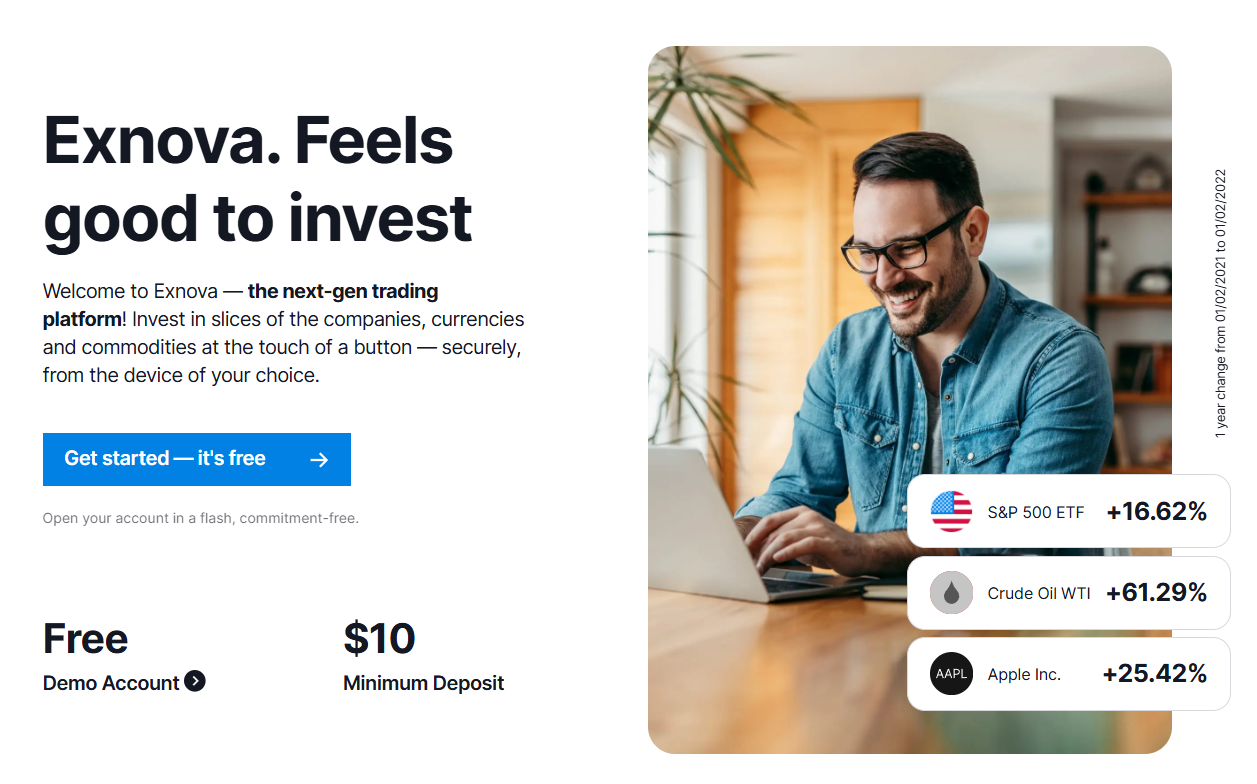
Users of Exnova have access to a broad selection of trading assets: currency pairs, stocks, commodities, cryptocurrencies, and binary options. Trades can be initiated with as little as $1, and the minimum deposit to start trading is $10. The leverage offered can reportedly go as high as 1:500, amplifying both potential gains and losses.

Although the platform promotes tight spreads and fast execution, there is no way for users to verify the accuracy of market data or order fulfillment. There have been multiple complaints about platform delays, unfilled orders, and suspicious price discrepancies that hurt trader performance.

Bonus Schemes and Withdrawal Issues

One of the most criticized aspects of Exnova is its handling of bonuses and withdrawals. While the platform offers deposit bonuses and affiliate rewards, these incentives come with restrictive conditions that often make withdrawing funds very difficult.

Traders have reported receiving bonuses without explicit consent. Once a bonus is credited, withdrawal requests may be blocked unless the user meets unrealistic trading volume requirements. This tactic is common among shady brokers who use bonus terms to retain client funds indefinitely.

Users also complain about prolonged or rejected withdrawal requests. In some cases, accounts are frozen after requesting a payout, especially when profits are involved. The verification process often stalls or resets, creating more obstacles.

Customer Support and Communication

Exnova provides email support and a contact form, but does not offer live chat or phone-based assistance. Users frequently report delayed or ignored responses. For a financial services provider, such poor customer communication is unacceptable and raises doubts about the company’s operational integrity.

Moreover, the platform has no physical office address or direct contact information, making it nearly impossible for customers to escalate urgent concerns or seek legal help.

Red Flags to Consider

Exnova exhibits numerous warning signs that should concern any prospective trader:

  • No verified regulatory license
  • Unclear corporate structure and offshore registration
  • Numerous complaints about account restrictions and denied withdrawals
  • Ambiguous and exploitative bonus conditions
  • Limited or non-responsive customer support
  • Lack of transparency regarding trade execution and pricing

Conclusion: Should You Trust Exnova?

Despite a sleek interface and inviting features, Exnova fails to meet the fundamental criteria of a trustworthy broker. The absence of regulation, coupled with opaque business practices and recurring user complaints, makes this platform highly questionable.

If you’re serious about trading and protecting your capital, consider using a regulated broker that operates under transparent legal frameworks and offers genuine customer support. Exnova, as it currently stands, poses more risks than potential benefits. Until the company becomes licensed, discloses its operations, and builds a reputation for honesty, it’s best approached with extreme caution — or avoided altogether.

Alrakamiya Broker Review

Alrakamiya is an online brokerage platform operating through the domains alrakamiya.com and alra-kamiya.link. The company claims to have been active for over 8 years and to be registered in Cyprus. However, no verifiable registration details or company identifiers are available. Independent reviews suggest that the project only began operating in 2025. There is no transparent information regarding legal entities, ownership, or official contact details on the broker’s website.

Regulation and Licensing

Alrakamiya claims to be regulated by major authorities such as the FCA (UK), DFSA (UAE), VFSC (Vanuatu), and CSSF (Luxembourg). However, these claims are unsubstantiated. Public records from these regulators contain no entries related to Alrakamiya. In addition, the Central Bank of Russia has officially listed Alrakamiya as a firm exhibiting signs of illegal activity in the financial markets. This indicates that the broker is operating without a valid license in jurisdictions where financial services require authorization.

Markets and Instruments

Alrakamiya positions itself as a CFD broker offering access to a variety of financial instruments:

  • Forex currency pairs
  • Equities of major global companies
  • Precious metals
  • Cryptocurrencies
  • Stock indices
  • Commodities

While the platform advertises wide market access, actual availability and execution of these instruments cannot be confirmed without opening a trading account.

Account Types and Trading Conditions

The broker advertises three account tiers:

  1. Standard — minimum deposit of $100, basic features, leverage up to 1:100
  2. Advanced — minimum deposit of $1,000, access to more markets including cryptocurrencies, leverage up to 1:500, so-called “deposit insurance”
  3. Professional — minimum deposit of $10,000, 24/7 manager support, personalized trading conditions, maximum leverage up to 1:500

Alrakamiya does not disclose essential trading terms such as spreads, commissions, margin requirements, or order execution rules. The lack of transparency raises significant concerns.

Trading Platform and Features

The broker provides access to its proprietary web-based platform (WebTrader), available via browser. There is no integration with trusted platforms like MetaTrader 4 or 5. Basic charting tools, pending orders, and trade history are reportedly available, but no technical specifications such as liquidity sources, data feeds, or execution speed are provided. This limits the platform’s credibility and suitability for active or professional traders.

Deposits and Withdrawals

Alrakamiya supports several payment methods:

  • Bank cards (Visa, Mastercard)
  • Bank wire transfers
  • E-wallets
  • Cryptocurrencies (e.g., Bitcoin, Tether)

While deposits are reportedly processed within 48 hours, clients often complain about severe difficulties with withdrawals. Many report that once a withdrawal request is made, the broker demands additional payments (taxes, insurance, handling fees), and still fails to release the funds even after these are paid. There is no transparent fee structure or processing timeline for withdrawals published on the website.

Client Feedback and Complaints

User reviews of Alrakamiya are overwhelmingly negative. The most common complaints include:

  • Inability to withdraw funds
  • Demands for additional undisclosed fees
  • Account blockages after withdrawal requests
  • High-pressure tactics from so-called personal account managers

There is no verifiable evidence of any user successfully profiting or withdrawing funds from the platform. These patterns are consistent with high-risk or fraudulent operations.

Regulatory Warnings

The Central Bank of Russia issued an official warning against Alrakamiya, listing it among entities exhibiting signs of illegal financial activity. This is a strong indicator that the broker is not authorized to operate in the country and further suggests broader compliance violations. No regulatory agency has issued a valid license for this broker.

Conclusion on broker

Alrakamiya lacks transparency, proper regulation, and a proven track record. The absence of verified licenses, combined with misleading claims, poor user feedback, and official regulatory warnings, clearly indicates that this broker is not trustworthy. All available evidence suggests that Alrakamiya is a high-risk and potentially fraudulent operation. Traders and investors are strongly advised to avoid this platform and instead choose a regulated broker with a transparent history and clear legal standing.

Mesojetus Broker Review

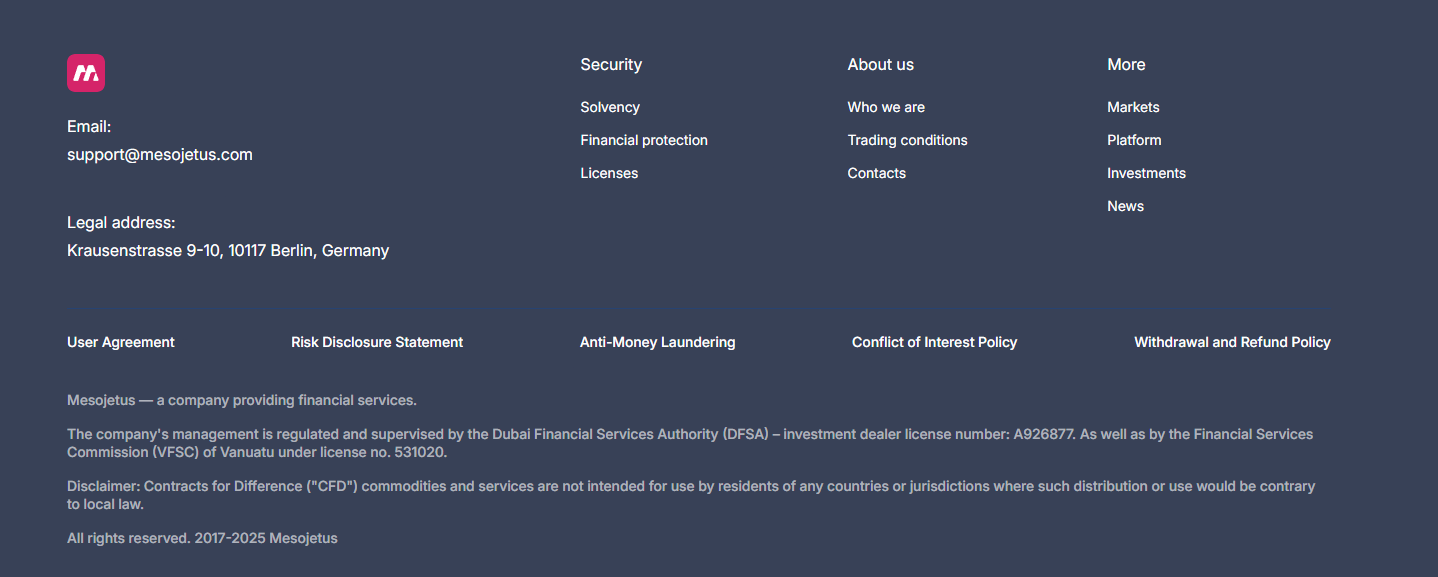
Mesojetus positions itself as an international online broker offering financial trading services. Official website: mesojetus.com. An additional mirror domain, ms-jetus.click, is also in use. The company lists its address as Krausenstrasse 9-10, 10117 Berlin, Germany. In reality, this location belongs to a coworking space (Mindspace), and no permanent office for the broker is found there.

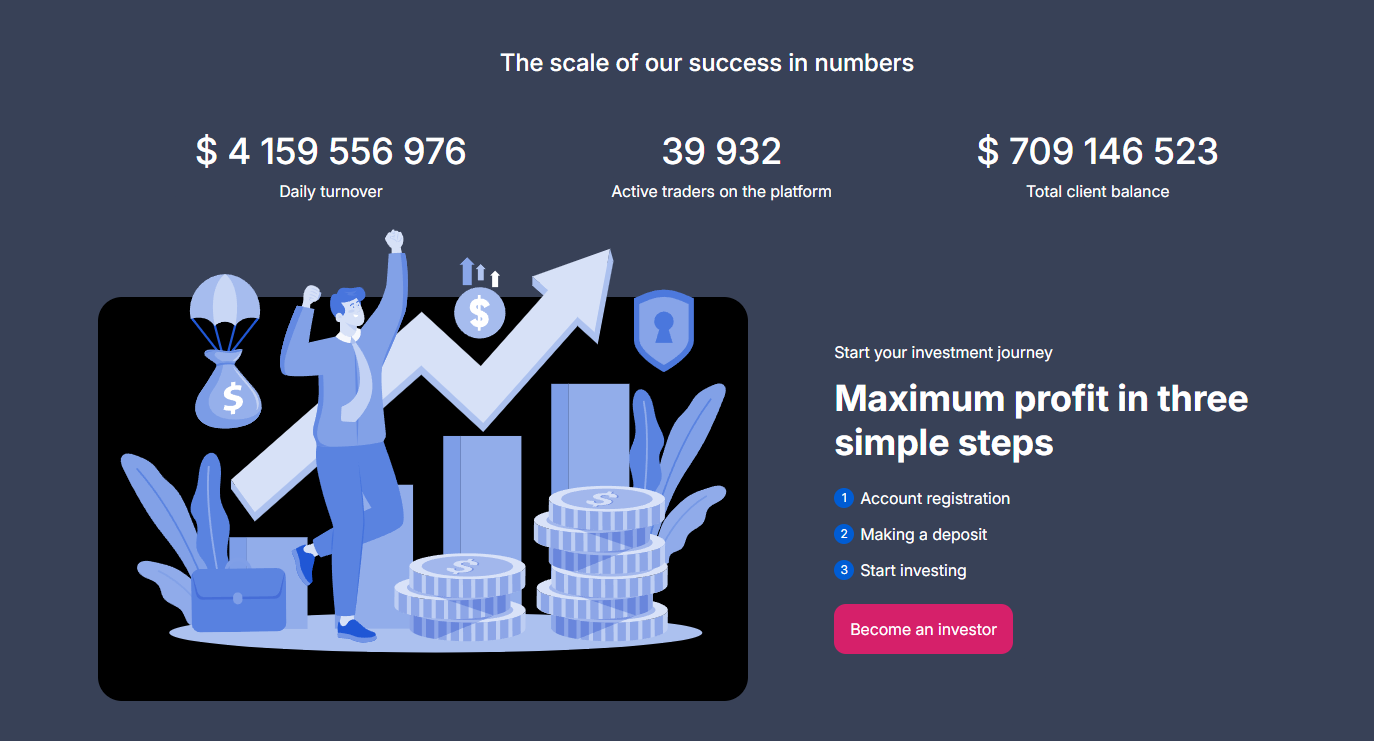
The domain mesojetus.com was registered in 2021, with active website use traced only since 2025. Claims of having many years of experience are not supported by verifiable data.

Regulation and Licensing

The website lists several financial regulators:

  • DFSA (Dubai Financial Services Authority)
  • VFSC (Vanuatu Financial Services Commission)
  • CSSF (Luxembourg)
  • FCA (UK)

The license numbers listed on the website could not be verified in the official registers of these authorities. The company is not licensed in any of the mentioned jurisdictions. Searches in the FCA, DFSA, and BaFin databases show no registration for Mesojetus.

On September 3, 2025, the Central Bank of Russia included Mesojetus in its list of entities showing signs of illegal activity in the financial market.

Trading Platform and Instruments

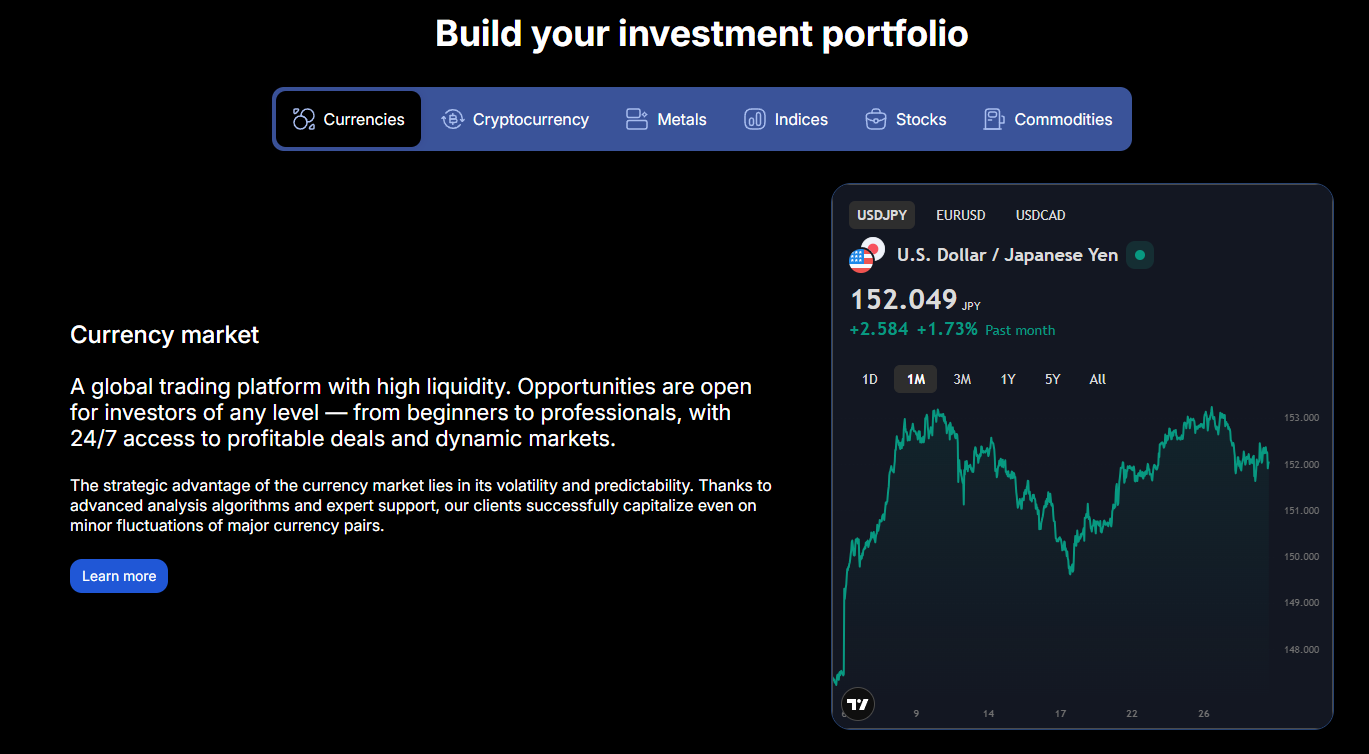
Mesojetus offers its proprietary web-based platform (WebTrader). Basic features are included: order placement, charting tools, and technical analysis. However, user reviews frequently report issues such as freezing orders, platform lags, and unstable performance.

Declared tradable instruments include:

  • Forex (over 45 currency pairs)
  • Global stocks
  • Cryptocurrencies (over 30 instruments)
  • Indices, ETFs, metals, and commodities

Account Types and Conditions

Three account types are offered:

  • Standard: minimum deposit $1,000, leverage up to 1:20
  • Advanced: from $25,000, leverage up to 1:50
  • Professional: from $50,000, leverage up to 1:100, personal account manager

Additionally, investment plans promising returns up to 3.5% per month are advertised. These rates are unrealistic and not typical of regulated brokers.

Deposits and Withdrawals

Officially, Mesojetus claims to support deposits via bank cards, e-wallets, and cryptocurrencies. In practice, most payments are accepted only in cryptocurrencies: BTC and USDT (TRC-20).

Customer complaints indicate frequent issues with withdrawals. Common patterns include:

  • Requests for additional payments such as “taxes” or “fees”
  • Redirecting users to another domain or subdomain
  • Threats to block the account unless further payments are made

Reputation and Client Feedback

Online reviews are predominantly negative. Major complaints include:

  • Inability to withdraw funds
  • Aggressive pressure and threats from broker representatives
  • Unexpected extra charges
  • Discrepancies between advertised and actual trading conditions

There are no credible positive reviews. Some fake positive comments may exist but lack authenticity.

Legal Transparency

The website provides no information about the legal entity behind the project. No company name, registration number, or legal documents are disclosed. The only contact method is the email address [email protected]. No phone number or alternative contacts are available.

The claimed jurisdiction under Vanuatu law contradicts the supposed German business address, indicating further inconsistency.

Connected Websites

The domains ms-jetus.click and mesojetus.com are directly linked. Mesojetus appears to be associated with other suspicious platforms (e.g., Lavrajim, Bteksoft) that follow similar deceptive practices.

Conclusion on broker

Mesojetus operates without a valid financial license. There is no regulation, no verified legal structure, and no transparency. The Central Bank of Russia has issued an official warning. Multiple user complaints describe blocked withdrawals and fraudulent behavior.

Trading through Mesojetus poses a high risk of financial loss. It is strongly advised to avoid engaging with this platform.

Bitwave Capital Broker Review 2025

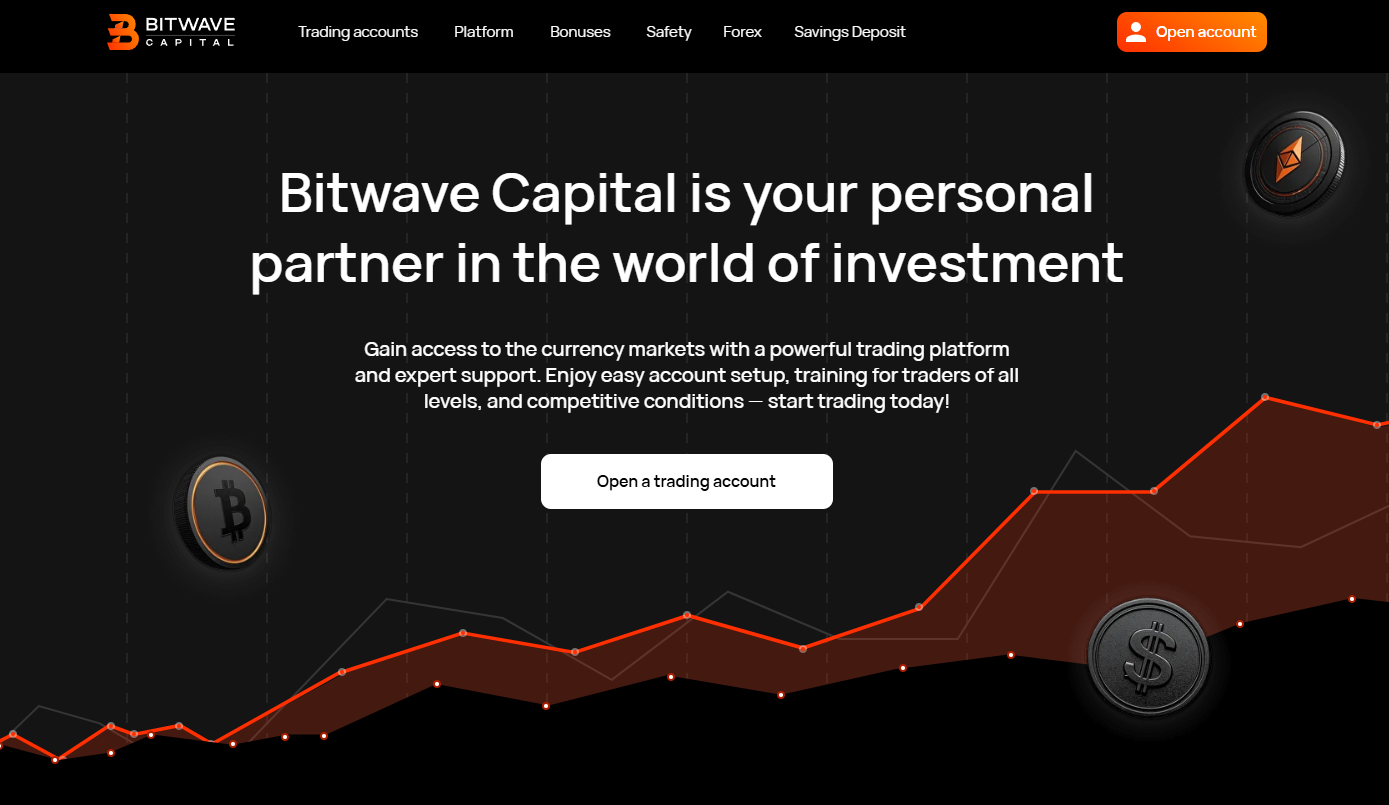
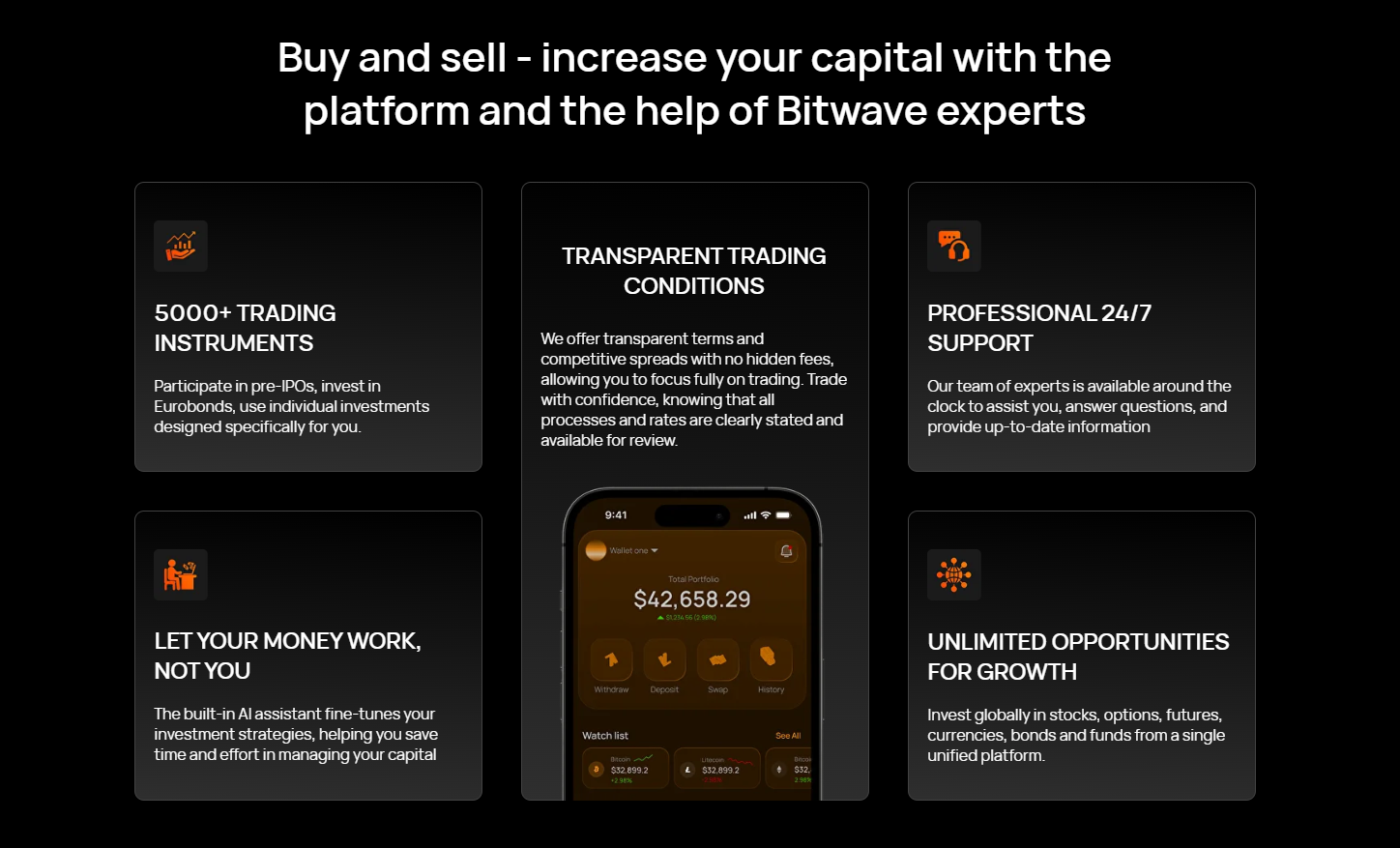
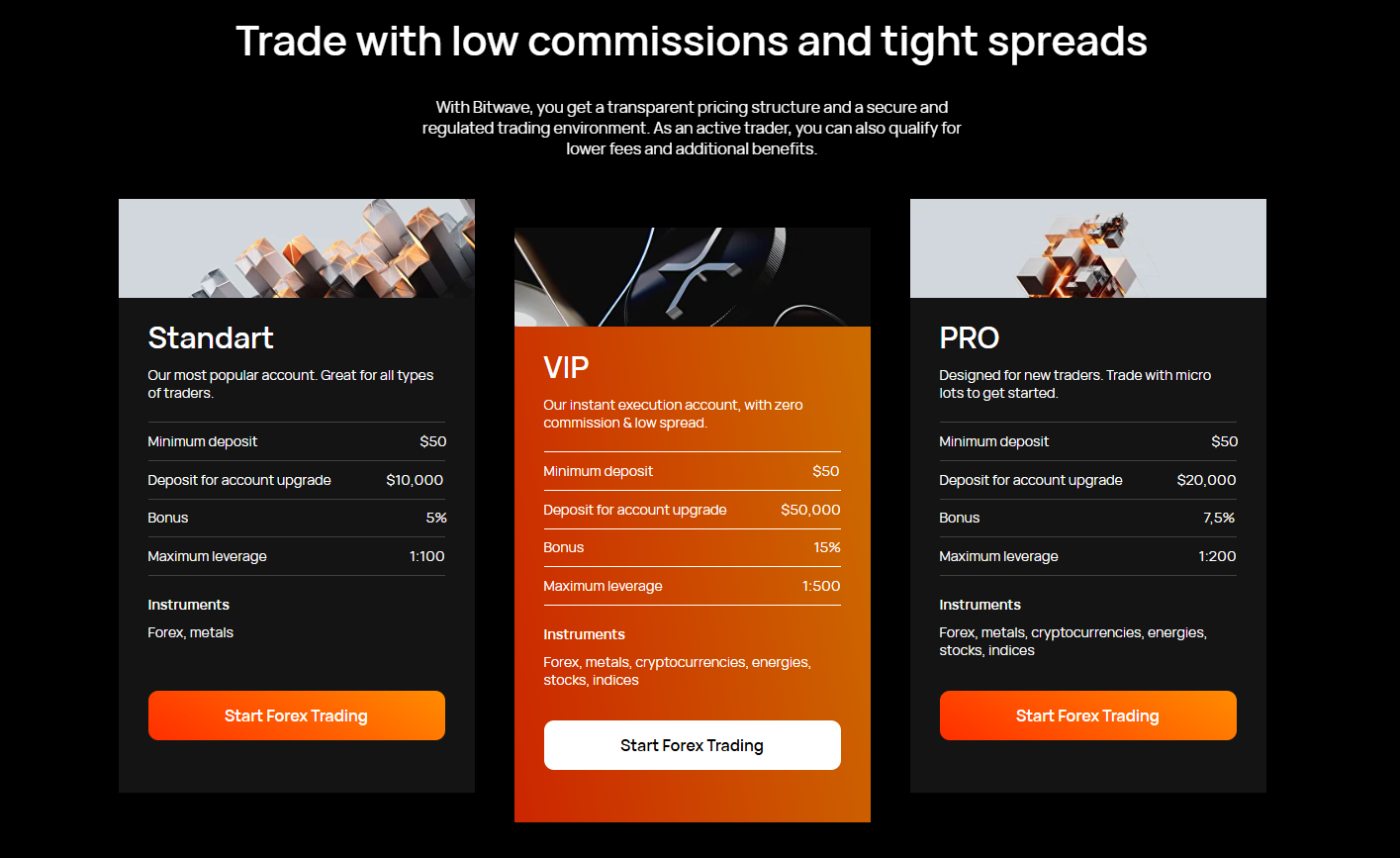
Bitwave Capital aggressively markets itself as an “innovative platform for professional trading,” using promises of “minimal spreads” and “global market access” to lure retail investors. Our comprehensive investigation reveals this is a classic bucket shop operation, whose entire infrastructure and business plan are engineered solely for the systematic theft of client deposits. The firm holds an abysmal independent trust rating of 0.99 out of 10.

The Regulatory Ghost: Operating in a Void of Legal Compliance

The legitimacy of any broker rests on its regulation. Bitwave Capital has none, relying instead on a deliberate strategy of concealment and falsification to appear credible.

The Absolute Regulatory Black Hole

Bitwave Capital holds NO valid licenses from any reputable, top-tier global regulator, including the FCA (UK), CySEC (Cyprus), BaFin (Germany), or ASIC (Australia). The company’s activity is completely unsupervised, meaning clients have zero legal protection under any internationally recognized financial directive.

The broker’s illegality is further confirmed by state authorities. The Central Bank of Russia (CBR) has officially added Bitwave Capital to its List of Illegal Financial Market Participants. This is a critical, formal verdict confirming the project’s fraudulent nature.

Jurisdictional Deception and Anonymity

The company claims to maintain an office in Cyprus. However, official checks of the Cypriot registry confirm that no entity named Bitwave Capital is legally registered there. The broker intentionally operates from an anonymous, undisclosed location to obstruct any potential legal claims from victims.

Fabricated Promises and Phony Documents

The “regulatory documents” displayed on the Bitwave Capital website are demonstrably fake. They contain contradictory dates and feature stamps belonging to non-existent or unrelated “controlling bodies.”

The company uses promises of “deposit insurance up to €20,000” to hook clients. Victims report that when they try to claim this security, customer support dismisses it as a “new client promotion” or imposes impossible, retroactive conditions.

The Predatory Business Model: Engineering Account Liquidation

Bitwave Capital functions as a “kitchen” (bucket shop), where personal managers and the trading platform collaborate to ensure the complete liquidation of client capital.

The Coercive Deposit Funnel

New clients are deliberately shown unrealistically high returns in demo modes or during initial low-volume trades. This psychological bait is designed to build false trust and encourage maximum deposits.

The so-called “Personal Managers” are high-pressure sales agents trained in coercive tactics. They aggressively push clients to deposit increasingly large sums, often resorting to threats to freeze already invested assets if the client refuses to comply.

Platform Manipulation and Fund Seizure (The Fake Loss)

The primary method of theft is the platform freeze. When a trader attempts to close a losing position or make a critical trade, the platform “deliberately freezes.” After this “technical glitch,” the client is informed that their funds were lost due to “sudden market spikes.” This simulates a genuine market force majeure to clear the account.

Bitwave Capital imposes mandatory trading bonuses with unachievable withdrawal conditions. For example, clients are required to execute a trading turnover 50 times the deposit amount before they can withdraw any of their own funds. This is a deliberate, legally indefensible maneuver to permanently lock capital within the scam system.

Client Experience: The Blockade and The Silent Disappearance

The accounts of Bitwave Capital’s victims follow a consistent, chilling pattern of theft and abandonment.

Account Locking and Unjustified Seizure

Numerous clients report that immediately following a large deposit, their trading accounts are unilaterally blocked. Customer support provides absurd accusations of “rule violations” but offers no evidence, resulting in a permanent communication blackout.

Upon attempting withdrawal, clients are subjected to artificial administrative barriers. The system demands continuous, endless cycles of “verification,” dragging the process out for months. All queries are either ignored or met with vague, non-committal responses.

Manager Abandonment

Once the maximum profitable deposit is secured, the “Personal Curator” immediately ceases all communication. The victim is left alone with a locked account and irrecoverable stolen funds.

FINAL CONCLUSION: Steer Clear of This Financial Threat

Bitwave Capital exhibits every definitive characteristic of a well-organized financial fraud: a fabricated legal structure, official government warnings, coercive sales tactics, and systematic refusal to honor withdrawal requests.

Maximum Warning: Investing a single dollar with Bitwave Capital carries the maximum risk of total capital loss. Do not trust this platform. Protect your assets by exclusively choosing brokers with verifiable ownership, transparent financial audits, and genuine licenses from reputable global regulators (FCA, ASIC, CySEC).

FINAL VERDICT: BITWAVE CAPITAL IS A DOCUMENTED, NON-REGULATED FINANCIAL SCAM. The firm operates with fabricated documents, is blacklisted by central banks, and guarantees total capital loss for every investor.

Bigarizonaco Broker Review

Bigarizonaco (official website: bigarizonaco.com) presents itself as an international online broker offering a broad range of financial services. The website provides contact details, including a Cypriot address (Petraki Giallourou 4, Aradippou 7102, Cyprus) and a phone number: +357 24 618 881. The platform is available in multiple languages, including English and Russian.

The broker claims to have been operating since 2017. However, domain registration records show that the website was created only in 2021. This discrepancy raises questions about the company’s real operational history. Additionally, the domain ownership changed hands in 2025, suggesting a possible rebranding or transfer of control.

Services and Trading Conditions

Bigarizonaco offers typical retail brokerage services. The website highlights the following features:

  • Three account types with minimum deposits ranging from $100 to $10,000.
  • Trading in forex, CFDs, stocks, and cryptocurrencies (though details are vague).
  • A proprietary trading platform (no technical specs or platform name provided).
  • Multi-currency funding options.
  • Deposits via credit cards and electronic wallets.

Despite a seemingly broad offering, there are serious concerns. The platform lacks public documentation, there’s no demo access, and technical transparency is minimal.

Regulation and Licensing

Bigarizonaco is not regulated by any recognized financial authority such as:

  • FCA (UK)
  • CySEC (Cyprus)
  • ASIC (Australia)
  • DFSA (UAE)
  • Bank of Russia

The website previously listed various licenses and registration numbers. Upon verification, all these licenses turned out to be fake, misused, or tied to unrelated or nonexistent entities. Some were even traced back to fabricated regulator websites.

The Central Bank of Russia has officially listed Bigarizonaco as a company with signs of illegal activity in the financial markets. The broker does not appear in any official registry of licensed financial firms, either in Russia or internationally.

Reputation and Customer Feedback

Most reviews about Bigarizonaco are negative. Users report issues with withdrawing funds, aggressive sales tactics, and arbitrary charges. Common complaints include:

  • Withdrawal requests being blocked unless an additional “tax” or “processing fee” is paid.
  • Account suspensions after refusal to pay extra fees.
  • Persistent cold calls and pressure to deposit more funds.
  • Refusals to provide transaction histories or trading reports.

Genuine positive reviews are rare or appear to be fake. The broker has virtually no presence on reputable forums or financial communities, which undermines trust.

Signs of Fraud

Several red flags suggest Bigarizonaco operates as a scam rather than a legitimate broker:

  • Fake licenses and registration claims.
  • False operating history (domain created in 2021 while claiming to exist since 2017).
  • Unclear fund withdrawal policies and lack of legal guarantees.
  • Use of cloned websites with different domain names but identical content.
  • Total absence of regulation or legal oversight.

These indicators strongly suggest that Bigarizonaco is structured to collect deposits from unsuspecting individuals without providing access to real financial markets.

Conclusion on broker

Bigarizonaco is not a licensed or trustworthy broker. The company distributes false information, uses fabricated licenses, and has been flagged by regulators for illegal activity.

Recommendations:

  • Do not open an account with Bigarizonaco.
  • Do not share your personal documents or payment information with them.
  • If you have lost funds, gather all evidence and report the case to your bank and law enforcement.

For safe and legal trading, only consider brokers that are regulated by respected financial authorities and have transparent operational records.

Gerchik & Co Broker Review

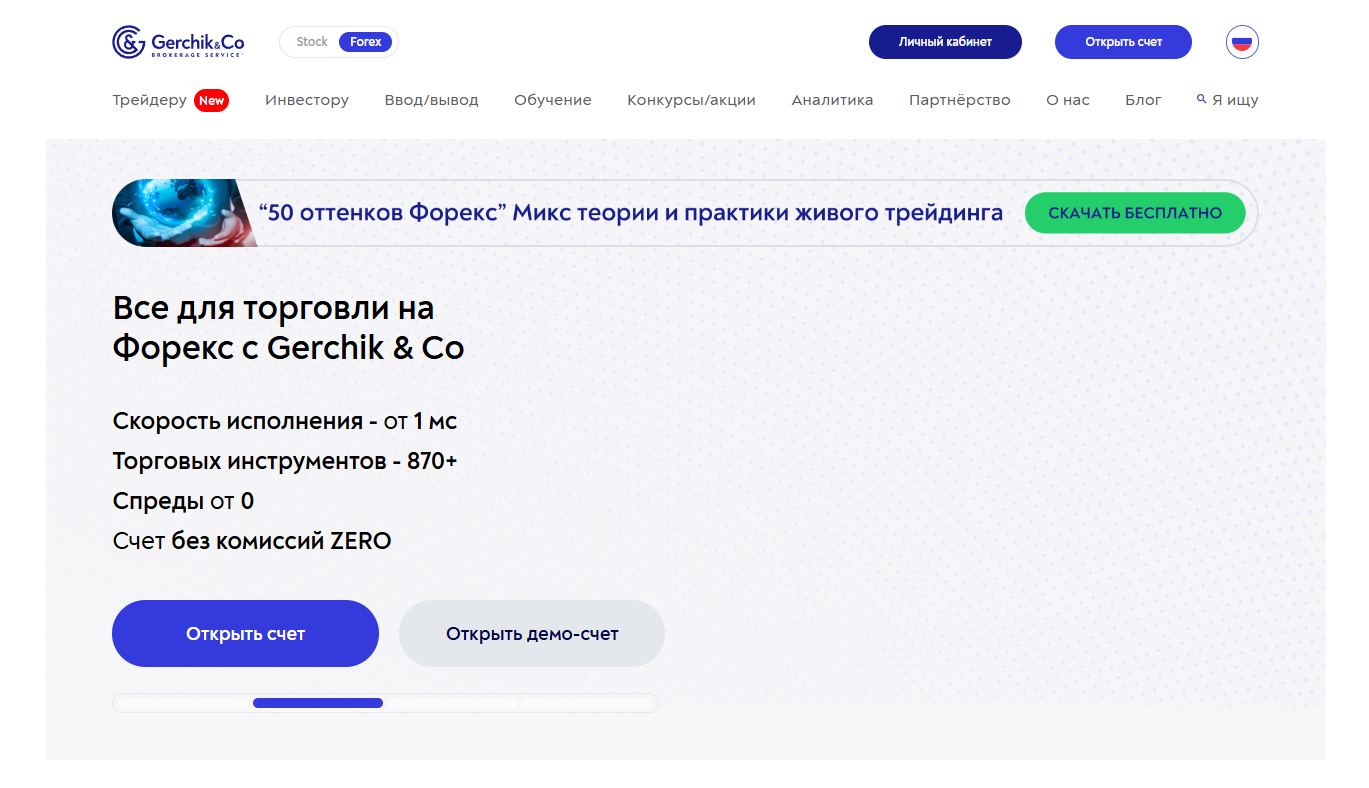
Gerchik & Co is a forex broker focused primarily on the Russian-speaking market. The company was founded in 2015 by professional trader Alexander Gerchik and Ivan Kroshny. Its main legal entity is registered offshore in Vanuatu. The broker offers access to the Forex market and CFDs on various instruments, including stocks, indices, commodities, and cryptocurrencies.

Licenses and Regulation

Gerchik & Co operates under licenses issued by two offshore financial regulators:

  • VFSC (Vanuatu Financial Services Commission) — License No. 40512, issued in 2018. This is the broker’s primary operating license.
  • FSC Mauritius (Financial Services Commission Mauritius) — A license issued to the group’s subsidiary, authorizing investment dealer activities.
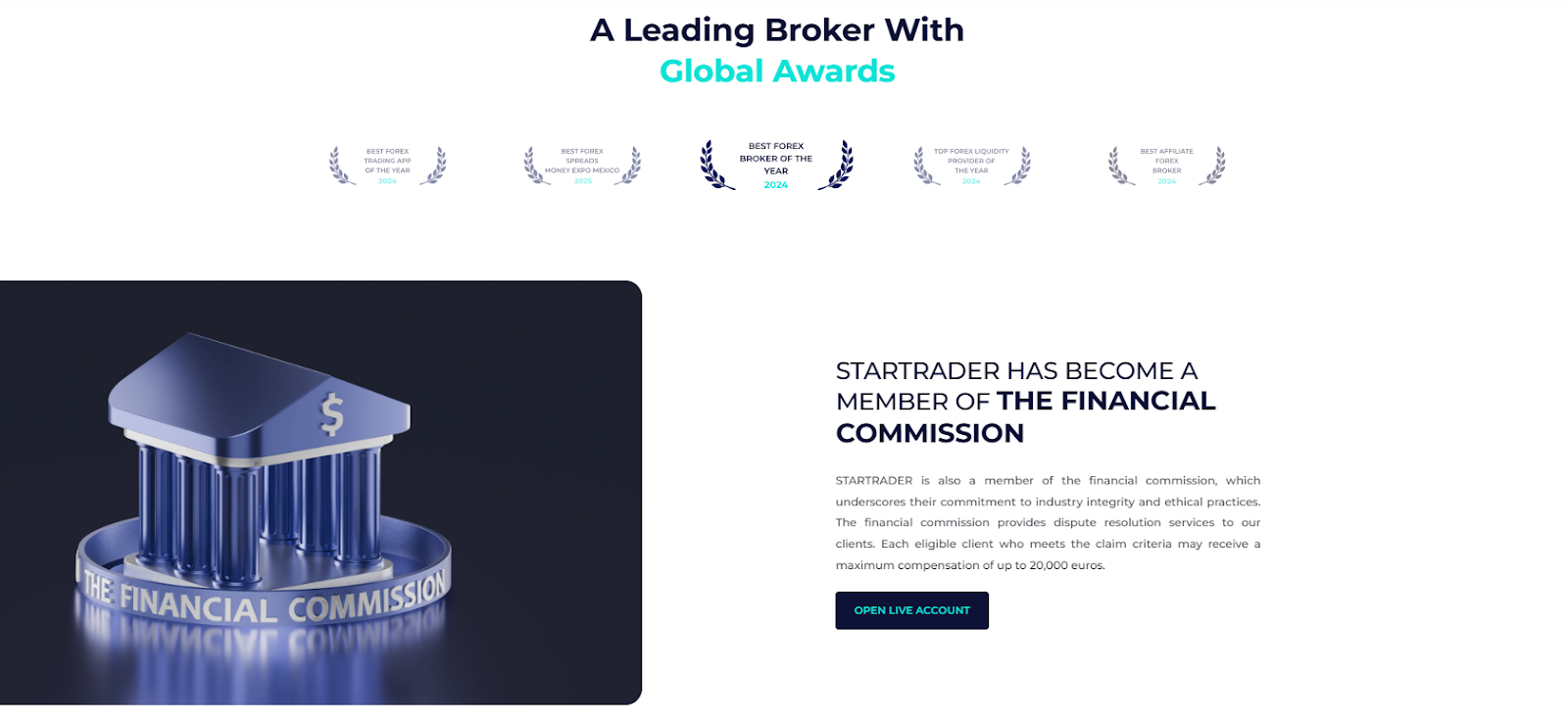
  • Member of the Financial Commission (FinaCom) — An independent dispute resolution organization for the forex market. As an A-category member, client claims are insured up to $20,000 in case of a justified complaint.

At the same time:

  • The company does not hold a license to operate in the Russian Federation.
  • It has been included in warning lists by the Central Bank of Russia and Ukraine’s NSSMC for signs of unauthorized financial activity.

Although Gerchik & Co is technically regulated, oversight from strong financial authorities is lacking, and its services are considered unauthorized in several jurisdictions.

Trading Conditions and Instruments

Gerchik & Co offers six types of trading accounts with minimum deposits ranging from $100 to $100,000. Commission fees vary by account type, ranging from $10 to $7 per lot. Leverage is up to 1:500 for smaller accounts, decreasing as account size grows. The broker provides access to over 400 instruments, including 71 currency pairs, CFDs on stocks, indices, cryptocurrencies, and commodities. All trades are executed via a market execution model (STP), though some traders report slippage.

Platforms and Technology

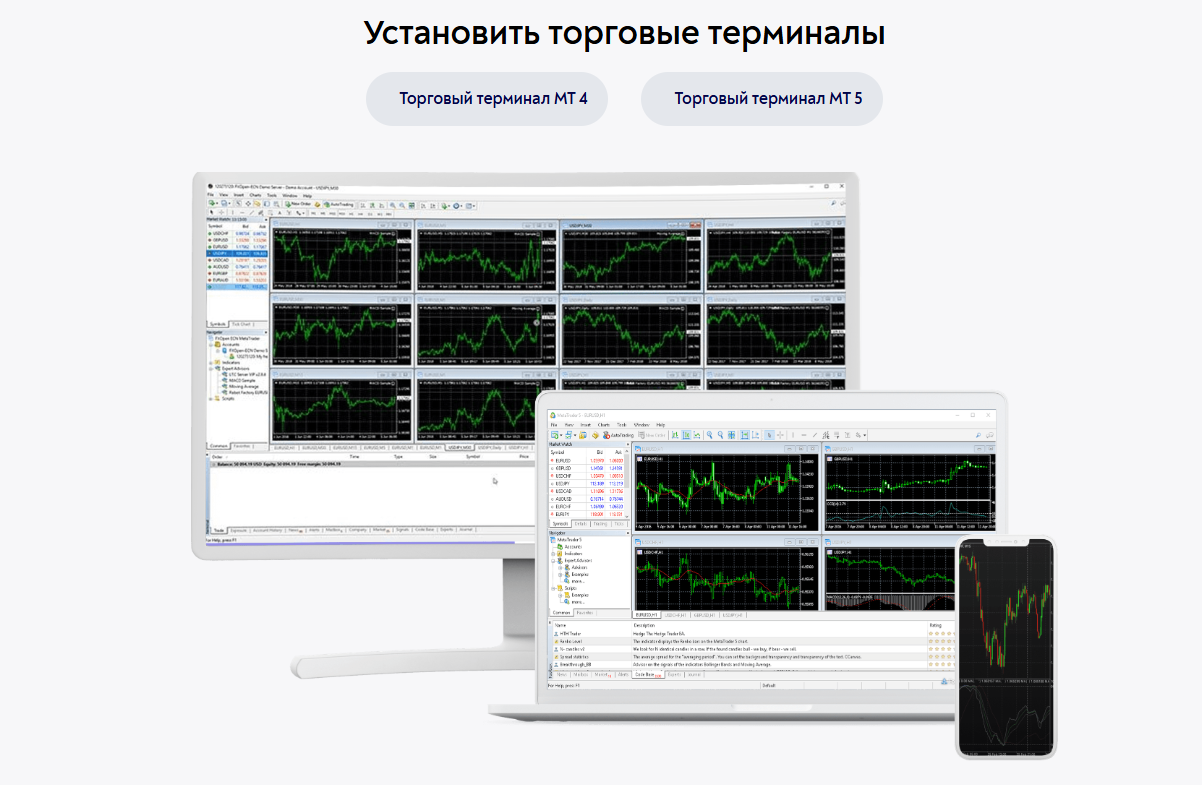
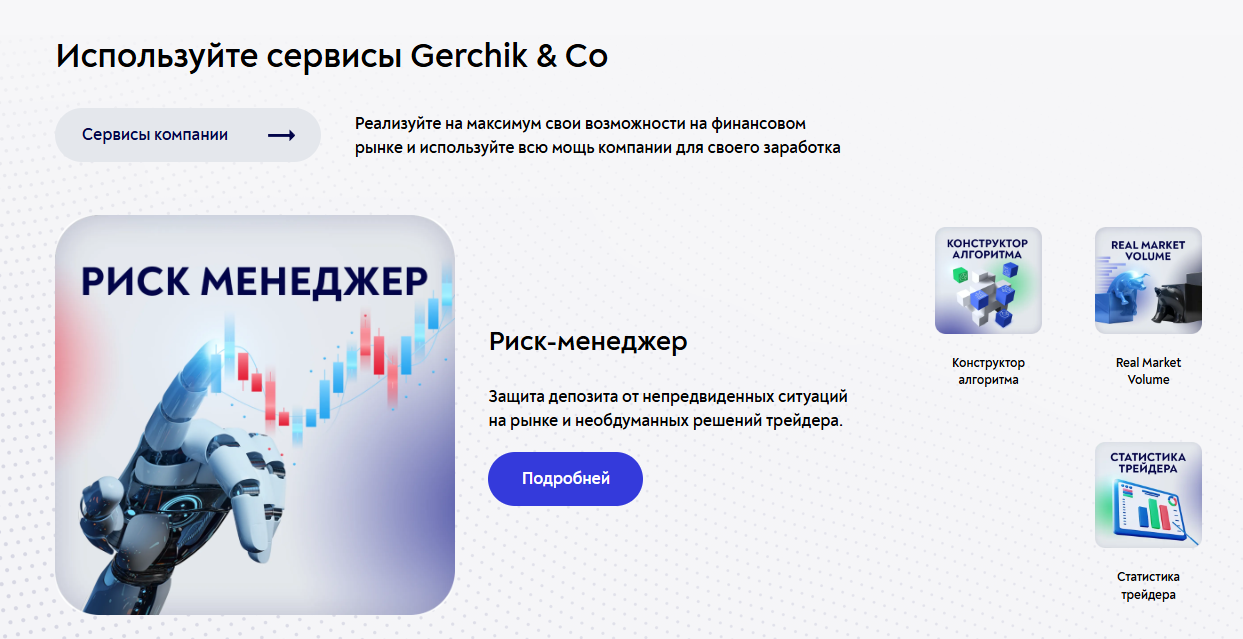
The broker supports MetaTrader 4 and MetaTrader 5 platforms. Additional proprietary services include the Risk Manager, Real Market Volume tool, trade analytics, and automation tools. Scalping and the use of trading robots are allowed.

Investment and Additional Services

Gerchik & Co offers TIMA investment accounts—similar to PAMM accounts—where traders manage investors’ capital. The company also provides demo accounts, educational courses, webinars, and a Prop Trading Challenge that gives traders the opportunity to manage capital provided by the broker.

Customer Feedback

Online reviews are mixed. Positive reviews mention reliable fund withdrawals, helpful support, and educational content. Negative feedback includes withdrawal delays, slippage issues, aggressive marketing, and difficulties withdrawing profits. The average user rating on independent platforms is below 3 out of 5.

Regulator Warnings and Controversies

Gerchik & Co is listed by the Central Bank of Russia and Ukraine’s NSSMC as operating without proper authorization. Some of its websites have been blocked in certain EU countries. Complaints have been raised about order execution behavior, especially when attempting to withdraw large profits.

Founder and Public Reputation

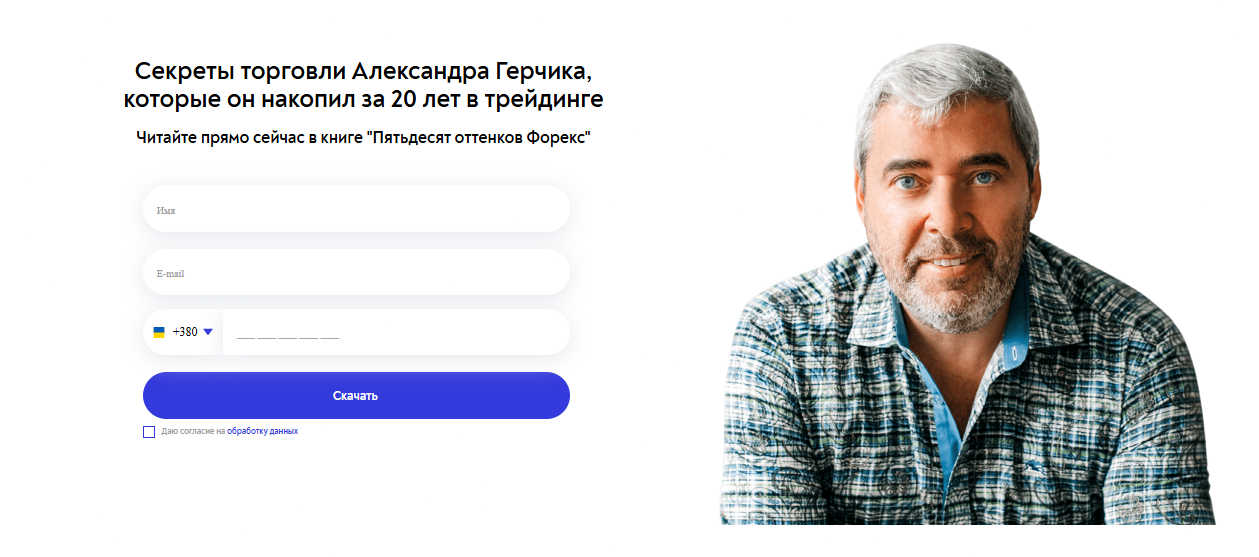
Alexander Gerchik is a co-founder of the company and a well-known trader in the Russian-speaking financial community. He has experience in the U.S. stock market and is actively involved in educational projects. While many respect his trading background, some critics accuse him of excessive commercialization and hard-selling training products.

Customer Support

Support is available via email, website chat, and messaging apps. Many users describe the service as prompt and professional, particularly in technical matters. However, some report receiving generic responses and difficulty resolving non-standard issues.

Fund Safety and Payments

Deposits and withdrawals are available via bank cards, e-wallets, and cryptocurrencies. Minimum withdrawal amounts and fees vary depending on the method. Since the broker is offshore, client funds are not protected by any governmental insurance. The company claims client funds are held in segregated accounts, but there is limited transparency on fund custody. Isolated complaints of withdrawal delays have been reported.

Conclusion on broker

Gerchik & Co is an offshore broker with a functioning infrastructure and a wide client base. While it holds formal licenses from low-tier regulators, it lacks oversight from strong financial authorities. Reviews are mixed, and regulator warnings raise valid concerns. Traders should approach this broker with caution, use only risk capital, and carefully monitor all terms and fund operations. Gerchik & Co may be suitable for experienced traders who are aware of the risks involved with offshore brokerages.

StarTrader Broker Review

StarTrader is an international broker offering trading services in Forex and CFDs. The company has been operating since 2017 and positions itself as a global brand. It provides access to trading instruments through MetaTrader 4 and MetaTrader 5 platforms, targeting both retail traders and institutional partners. StarTrader promotes itself as a liquidity provider with a broad geographic presence and localized support.

Regulation and Licenses

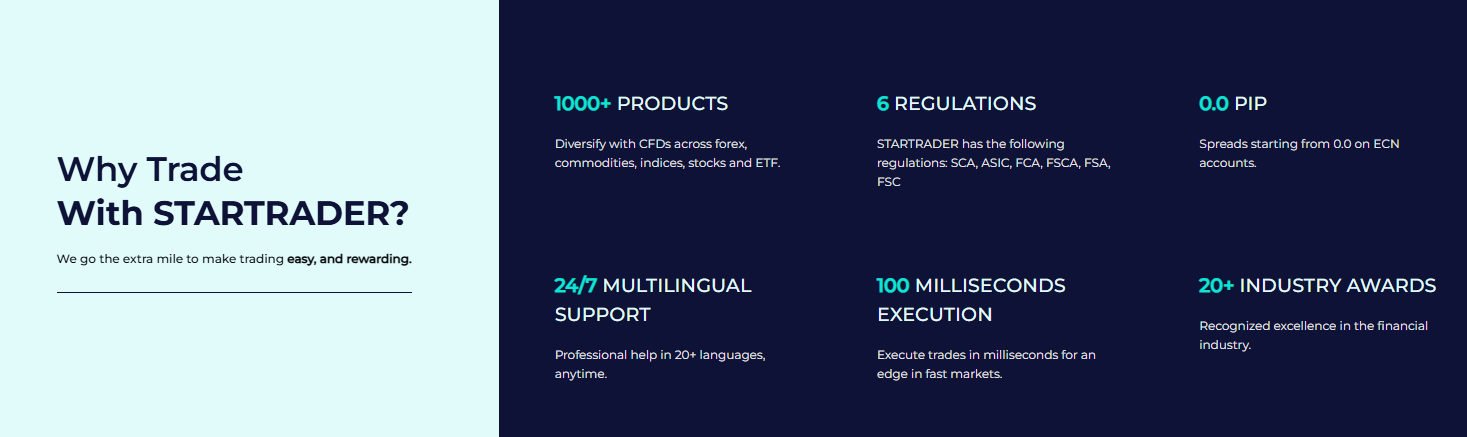
StarTrader claims to hold multiple licenses in various jurisdictions, including:

  • Australia (ASIC)
  • United Kingdom (FCA)
  • South Africa (FSCA)
  • Seychelles (FSA)
  • Mauritius (FSC)
  • United Arab Emirates (SCA – limited license for promotion only)
  • Cyprus (not a trading license)

However, a significant part of the company’s operations is conducted through offshore entities such as those registered in Saint Vincent and the Grenadines. These offshore registrations are not subject to strong regulatory oversight and do not provide client protection mechanisms typically available under stricter jurisdictions.

In August 2023, the Spanish financial regulator CNMV officially warned that StarTrader was offering investment services in Spain without proper authorization. This highlights a breach of European regulatory requirements and means that clients in Spain (and potentially other EU countries) are unprotected.

Company Structure

StarTrader is not a single legal entity but rather a network of companies operating under the same brand. Each entity is licensed in its own jurisdiction, while most global clients are routed through offshore subsidiaries. The real owners and senior management of the group are not publicly disclosed.

The main operating entity for many international clients appears to be based in Saint Vincent and the Grenadines, a jurisdiction that does not regulate Forex trading. This limits the options available to clients in case of disputes or legal claims.

Trading Conditions

StarTrader offers the following trading features:

  • Platforms: MetaTrader 4 and MetaTrader 5
  • Leverage: up to 1:500
  • Instruments: Forex pairs, stocks, indices, commodities, cryptocurrencies
  • Spreads: from 0.0 pips on ECN accounts
  • Commissions: vary by account type; some accounts offer commission-free trading
  • Minimum deposit: from $50
  • Copy trading: available via Social Copy Trading platform
  • Payment methods: bank transfer, cryptocurrencies, credit/debit cards

The trading environment is competitive, particularly on ECN accounts with low spreads. Customer support is available via live chat, email, and social media.

Client Feedback and Reputation

User feedback on StarTrader is mixed. On the positive side, clients mention fast execution, low spreads, and helpful support. On the negative side, a considerable number of users report issues related to withdrawal delays, denied profits, unexplained balance deductions, and blocked accounts.

On Trustpilot, StarTrader has an average rating. While many 5-star reviews are present, a significant number of 1-star reviews (around 30%) raise serious concerns. Some traders report successful use of the platform, but many others describe experiences where they lost access to funds or received no response from support after encountering problems.

Regulatory Warnings and Compliance Issues

In addition to the CNMV warning, third-party financial monitoring sites and compliance analysts have raised red flags about StarTrader’s operations. These include offering services in jurisdictions where the broker lacks authorization and providing high leverage to clients in regions where such levels are restricted (e.g., 1:500 in the EU, where the limit is 1:30).

Some reports suggest that StarTrader does not fully comply with the risk disclosures or operational transparency required in tightly regulated markets. Independent analysts have categorized the broker’s compliance status as high risk, especially due to its offshore entities.

Clone Websites and Brand Misuse

Numerous phishing and scam websites have appeared online using the StarTrader brand or similar domain names. These include variants such as startrader.net, startrader.cc, startraders.co, and others.

StarTrader has published public warnings on its official website listing these fraudulent domains. The broker confirmed that only the domain startrader.com is legitimate. Clients are advised to be cautious and to verify the platform and representatives they interact with.

Despite these warnings, the proliferation of clones and fraudulent sites increases the reputational risks associated with the brand.

Withdrawal Issues

Withdrawal-related complaints form the core of negative feedback about StarTrader. Multiple clients have reported:

  • Withdrawal requests being delayed or rejected without clear explanation
  • Profits being canceled due to alleged rule violations
  • Unexplained deductions from account balances
  • Blocked accounts without prior notice
  • Customer support failing to provide follow-up or solutions

In one documented case, a trader’s profit of over 2,500 USDT was removed from the account with no warning, and the withdrawal request was denied based on vague accusations of high-frequency trading. No evidence was provided, and the transaction history did not reflect the removal of funds. This raises concerns about the broker’s internal practices and risk management protocols.

Some clients also report receiving legal threats from the company for leaving negative reviews, which further undermines trust in the firm’s integrity.

Conclusion on broker

StarTrader is an active broker with a real operational footprint and multiple legal registrations. It holds licenses from medium-tier regulators and promotes its brand via partnerships and sponsorships in regions like the UAE.

At the same time, the broker’s reliance on offshore entities, lack of transparency in ownership, and unresolved client complaints are significant risk factors. Regulatory warnings, a high number of negative reviews, and technical practices like removing profits without notice point to potentially harmful business conduct.

While StarTrader is not a confirmed scam, it demonstrates characteristics of a high-risk offshore broker that operates beyond strict regulatory oversight. For traders considering this platform, due diligence is essential, and caution is strongly advised, especially regarding fund withdrawals and long-term capital deposits.

100KS Fund Broker Review 2025

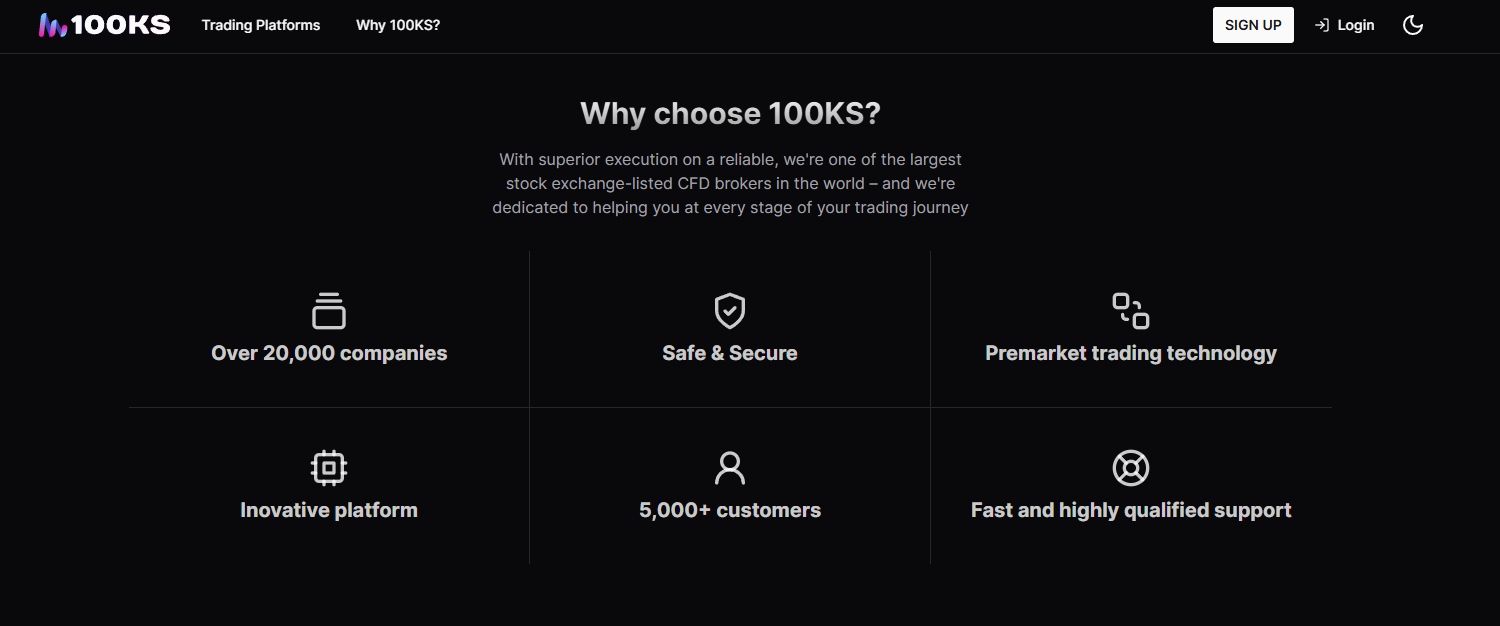
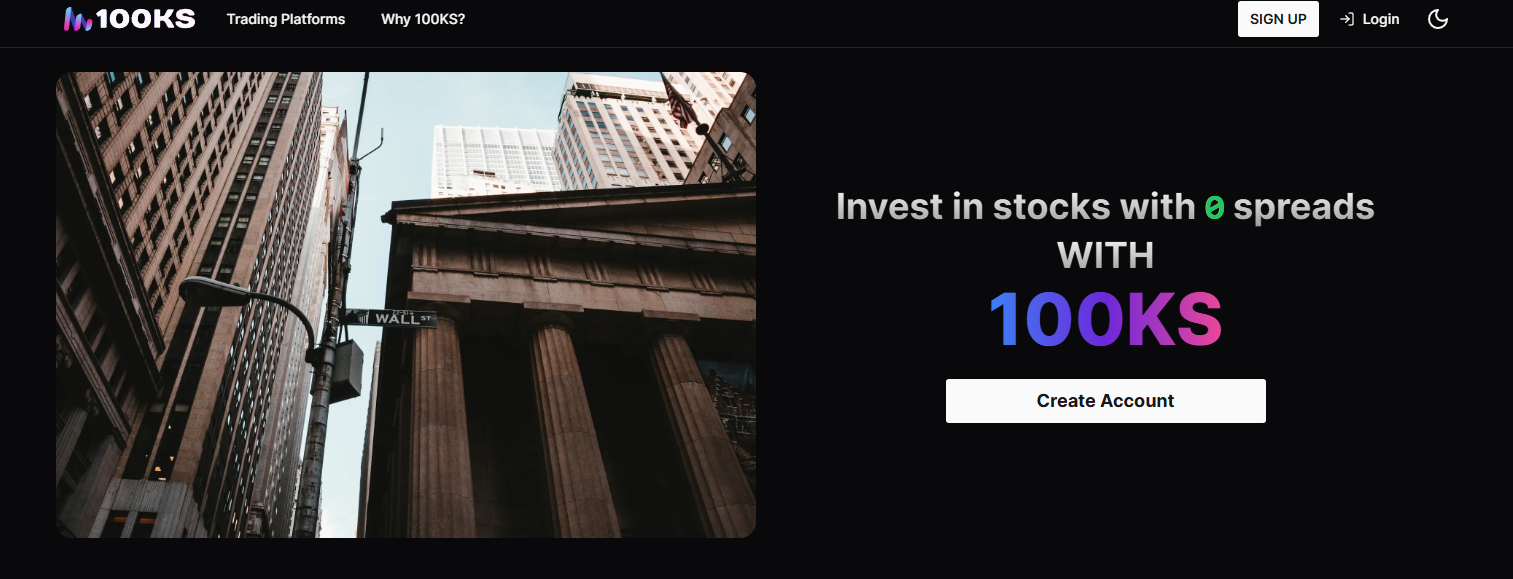
100KS Fund markets itself as a global broker with “0% stock spreads,” VIP tiers, and round-the-clock service. Scratch the surface and you find a classic cocktail of offshore registrations, anonymous ownership, non-verifiable “awards,” and a proprietary platform that customers say doesn’t behave like a real market venue. This review connects the dots — corporate structure, website history, platform behavior, user complaints—and maps the risk so you can make an informed decision.

Executive Snapshot

  • Status: Unregulated, offshore IBC (St. Vincent & the Grenadines; Mwali/Comoros references)
  • Public claims vs. facts: Claims “since 2017,” but domains appear 2023–2025
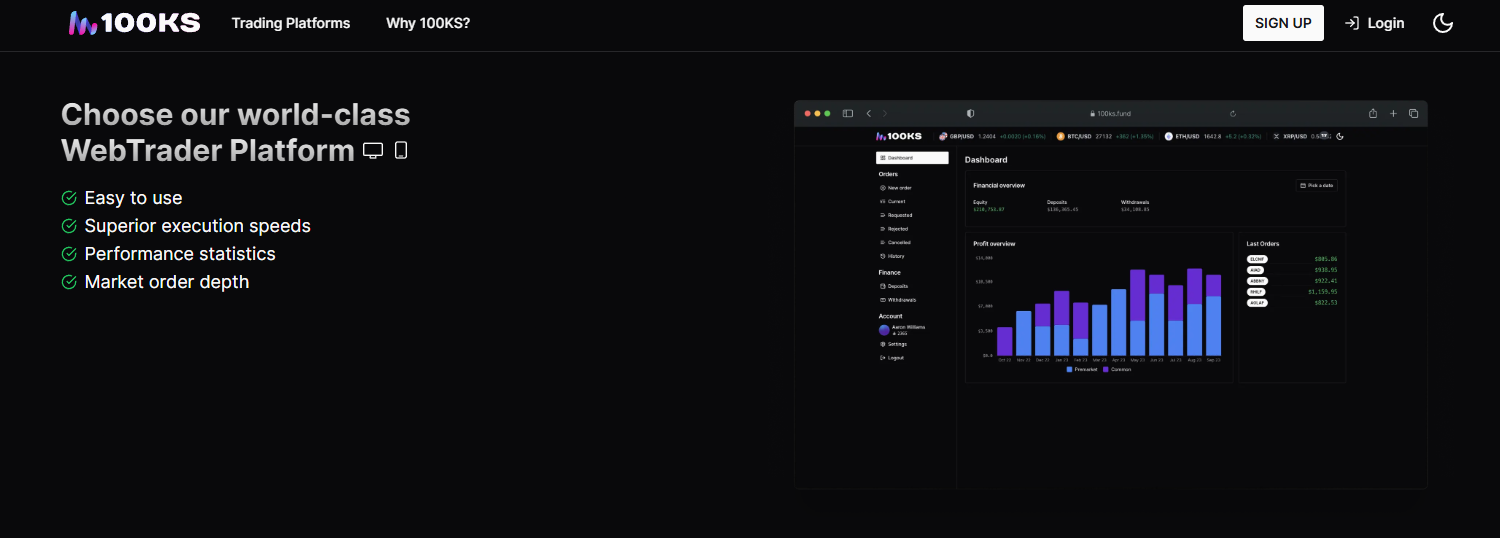
  • Platform: Proprietary web-trader (closed system), not MT4/MT5
  • Instruments: CFDs on stocks/indices/crypto/metals (per marketing)
  • Core risk: Persistent reports of non-payment and “pre-withdrawal fees”

Corporate Identity

100KS Fund Ltd. presents as an offshore IBC in St. Vincent & the Grenadines, while its legal pages casually drop Mwali/Comoros references. That dual-jurisdiction footprint isn’t diversification; it’s a regulatory minimization strategy. SVG’s registrar explicitly does not supervise forex activity; Comoros “authorizations” are paperwork mills. In practice, neither setting forces best execution, capital buffers, or client-fund segregation. For a broker that holds customer money and makes a market against them, that’s… convenient.

There’s no searchable license with CySEC, FCA, ASIC, SEC, or any mainstream authority. That matters for two reasons:

  1. No prudential oversight (solvency, audits, conduct rules).
  2. No complaints pathway (ombudsman, compensation scheme).
    If a dispute escalates, you’re not stepping through a regulated resolution playbook; you’re emailing a support inbox in an offshore time zone.

Legitimate brokers showcase named directors, a compliance officer, and a physical office you can actually walk into. Here, you get no executives, no board, no phone lines; the single reliable contact is [email protected]. That’s operationally minimal and litigation-resistant: nameless people are hard to sue, and mailbox entities can disappear overnight.

The “since 2017” storyline vs. the calendar

Brand claims longevity; public internet records show meaningful activity only from 2023 onward, with the flagship domain even younger. That’s not a rounding error; it undercuts the entire credibility pitch (past awards, a seasoned team, “thousands of happy clients”). If the founding myth is soft, you should assume everything layered on top needs proof you’ll never get.

Bottom line: This isn’t a broker with a tidy org chart and a proud regulatory badge. It’s a jurisdiction-hopping shell designed to minimize accountability and maximize extraction.

Website & Domain Timeline: The Clock Doesn’t Lie

Reputable brokers accrue digital sediment: archived pages, press releases, API docs, stable legal libraries. 100KS’s trail shows late arrivers (mid-2023+) and frequent reshuffles. That pattern is common among short-cycle boiler rooms that spin up a clean domain, harvest deposits, then rebrand when search results turn toxic.

Sections like “Trading Services” and “Trading Platform” read as stubs or dead links; the “Legal” area hosts boilerplate PDFs you can find copy-pasted across other offshore sites. What’s notably absent:

  • Full fee schedules (spreads, commissions, swaps/overnights).
  • Execution disclosures (LPs, routing, slippage policy, last-look).
  • Client-money statement (segregation, banks, trust structure).
  • P&L tax guidance (how fees/taxes are actually handled).

A credible broker over-discloses this stuff. Silence is not a neutral choice; it’s a signal.

Years in market ≠ quality, but in brokerage it correlates with infrastructure (risk controls, ops staff, compliance). A 2023–2025 footprint cannot plausibly backfill a 2017 claims deck. If the story and the timestamp diverge, believe the timestamp.

Regulation & Client Protection

Without EU/UK/US/AU authorization, you lose:

  • Segregated client funds under enforceable rules.
  • Best-execution obligations and audit trails.
  • Capital adequacy requirements (to survive market stress).
  • Ombudsman escalation and compensation schemes (e.g., FSCS in the UK).

Offshore “authorizations” ≠ regulatory supervision. An offshore certificate may look official, but it generally doesn’t police pricing, custody, or conflicts of interest. If your funds are rehypothecated, if spreads widen on news, if withdrawals stall — there’s no statutory lever you can pull.

If something goes wrong, recovery narrows to: chargeback windows (if card-funded), law enforcement reports, and whatever leverage your bank can bring. Crypto rails? Non-reversible by design. Time works against you.

Product & Conditions

CFDs across equities, indices, crypto, metals; copy-trading, VIP tiers, 24/7 support, “0% stock spreads,” and “fast withdrawals.” It’s the greatest hits album of offshore marketing.

What you actually need (and don’t get).
  • Published spreads/commission tables per symbol class, not slogans.
  • Swap rates and how they’re calculated (tonight, not last quarter).
  • Account ladders (min deposits, margin stop-out levels, fee perks).
  • Corporate actions policy on CFDs (dividends, splits, rights issues).
  • Execution venue & LP list, slippage/latency metrics, rejection codes.

Instead you’re nudged to register first, where details can be “personalized.” That’s a polite way of saying opaque and variable.

Leverage & margin — the invisible throttle. Offshore shops often dangle 3–30× crypto or 100–500× FX/indices. High leverage isn’t inherently evil, but in an unregulated b-book, it’s a control dial: the house decides your fate under volatility (requotes, widening, margin events). No public ratios? Assume house advantage.

Platform: Proprietary web-trader

100KS doesn’t offer MT4/MT5 or another third-party terminal with exportable logs, independent plugins, and a vast community scrutinizing fills. Instead, you’re in a closed interface where:

  • Price feeds can be delayed or synthesized.
  • Stops can slip in one direction far more than they ever improve (asymmetric slippage).
  • Disconnects appear at inconvenient moments (right before stops/rollovers).
  • Order IDs and audit trails are non-portable (good luck proving abuse).

When the broker is counterparty (b-book) and the platform operator, they control both sides of the screen. Without a regulator checking logs, that’s like playing poker in a casino where the dealer, the camera system, and the rules committee are all the same person.

Funding & Withdrawals

Deposit rails: cards, wires, crypto (spotlight). Crypto is emphasized because it’s fast, borderless, and non-reversible — perfect when the business model values inflow over outflow.

Withdrawal pattern (as reported by users):

  1. You request a payout.
  2. Support cites a new prerequisite: “tax prepayment,” “verification deposit,” “international wire fee,” “AML clearance.”
  3. You pay (some do).
  4. Funds still don’t arrive; sometimes the account is locked, sometimes you’re told to pay another fee.

Reality check: Legit brokers net fees/taxes from proceeds. They don’t require fresh inbound payments to release your own balance. That’s a bright-red heuristic you can apply everywhere.

Acquisition Engine: Referrals and “Success Coaches” 

Instead of organic brand trust, 100KS leans on referrals/IBs, glossy advertorials, and unsolicited DMs from “mentors” or “investors” flaunting results. Missing is a public IB schedule (payout tiers, criteria, disclosures). That opacity encourages aggressive promises with little accountability.

Brokers with real retention don’t need to pressure deposits via social pitches. When growth depends on new money instead of happy, returning clients, you’ve got a churn-and-burn engine — not a brokerage.

Conclusion on 100KS Fund

100KS Fund positions itself as a global broker offering cutting-edge trading opportunities, but the evidence paints a very different picture. Behind the glossy promises of “0% spreads,” VIP tiers, and “fast withdrawals” lies an unregulated offshore entity with no transparent ownership, no recognized license, and a track record of withdrawal failures.
The company’s corporate identity is stitched together across offshore jurisdictions, its website footprint contradicts its claimed operating history, and its proprietary platform operates as a closed system prone to manipulation. Clients report consistent patterns: deposits are easy, but withdrawals trigger fabricated hurdles such as “tax prepayments” or “verification deposits.”

Coupled with aggressive referral-driven marketing and the absence of client protections, 100KS Fund shows the hallmarks of a boiler-room CFD operation rather than a trustworthy financial intermediary. Investors have little to no recourse if funds are withheld.

Final verdict: 100KS Fund is not a reliable broker but rather a high-risk scheme designed to extract deposits without accountability. Traders and investors are strongly advised to avoid this company and to choose only regulated brokers in recognized jurisdictions where investor protections and legal remedies are real.

Defazz Broker Review 2025

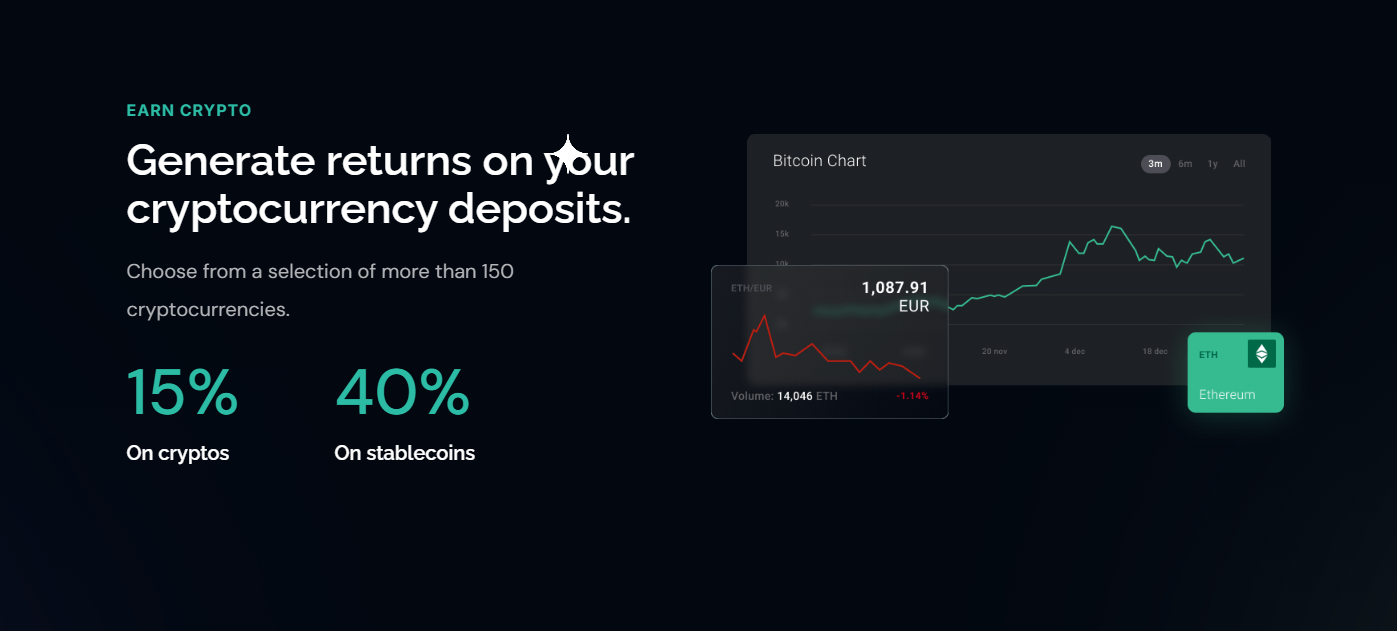
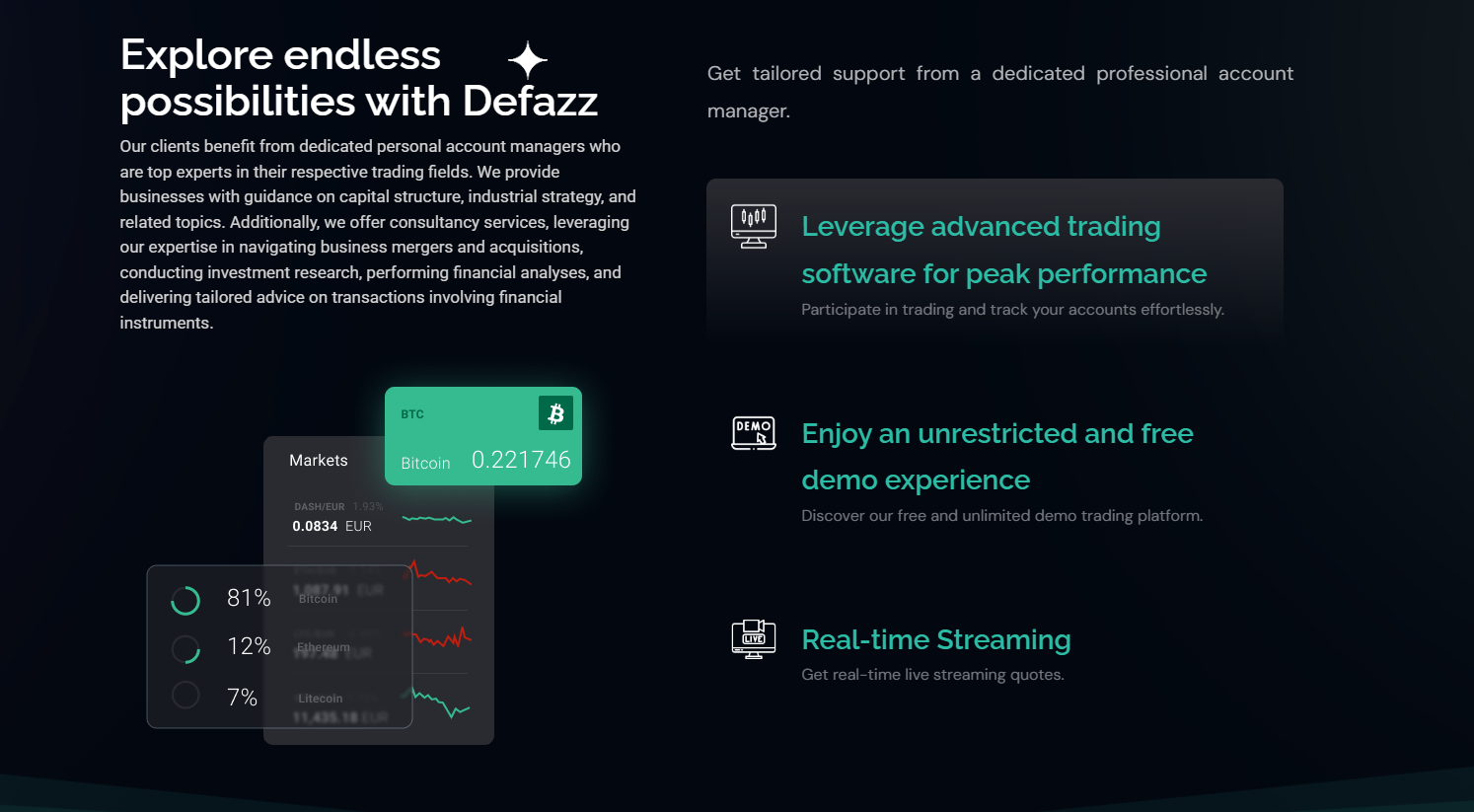
Defazz (operating via domains defaazz.com and deefazz.com) positions itself as a global brokerage platform, claiming to provide access to forex, stocks, CFDs, and cryptocurrencies. The company advertises low entry barriers (minimum deposit from $250), high leverage up to 1:100, and additional perks such as bonuses, “fund insurance,” and personal account managers. On its website, Defazz presents itself as a reliable and innovative broker with an office in London and alleged licences from leading regulators.
A closer examination shows that these statements do not withstand scrutiny. The domain was only registered in June 2025, the UK address is no more than a virtual office, and the licences mentioned on the site are fabricated. Behind the promises of secure trading lies an unregulated and anonymous entity. Numerous client reports confirm the fraudulent nature of the project: blocked withdrawals, invented fees of up to 40%, account freezes, and threats when victims attempted to take legal action.

This review gathers all available facts about Defazz — from its false regulatory claims to user experiences — and demonstrates why the broker should be considered a high-risk scam operation.

Company Profile & Web Footprint

Brand & domains. The operation trades as Defazz and runs via defaazz.com with reported mirrors such as deefazz.com and a cabinet at web.defaazz.com. Multiple domains/subdomains are typical of short-lived schemes that rotate URLs to evade blocks and reputation drag.

“Founded in 2020” claim vs. reality. Marketing copy suggests a 2020 start. Independent checks contradict this: defaazz.com was registered only in June 2025, with no verifiable Defazz activity before that. The “long track record” narrative appears fabricated to manufacture credibility.

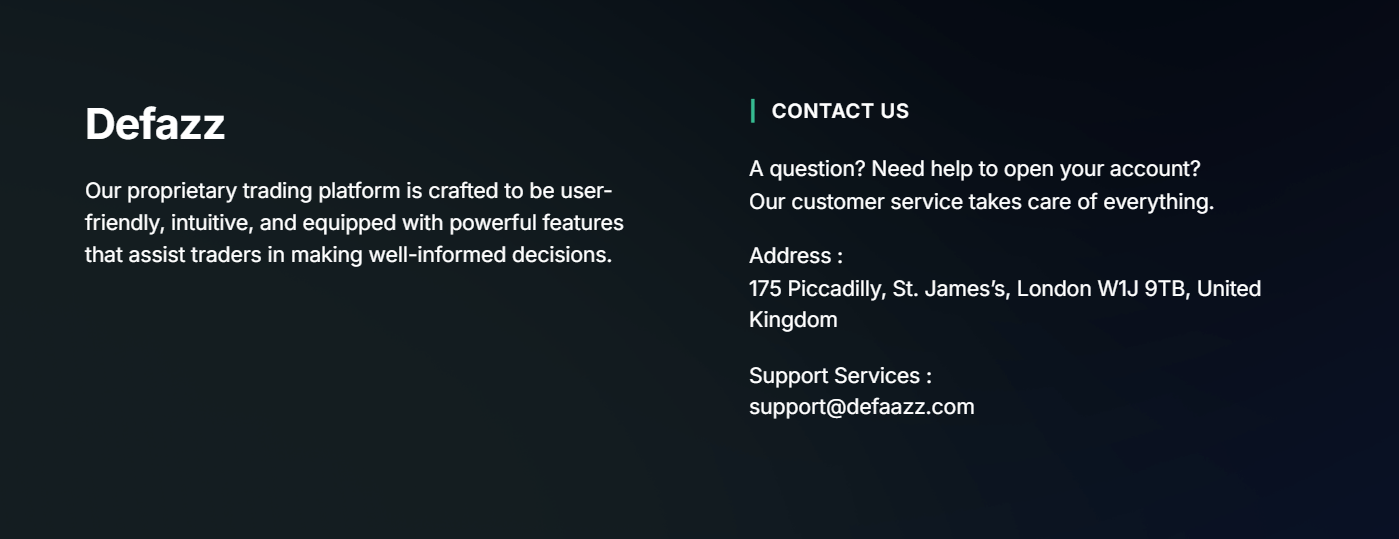
Address. The website cites 175 Piccadilly, St James’s, London W1J 9TB—a prestigious serviced-office location. There is no evidence Defazz operates there as a regulated UK firm or maintains a real office presence. Using a glossy address without corporate traceability is a known credibility prop.

Ownership & management. No legal entity name, incorporation number, directors, or beneficial owners are disclosed. WHOIS is privacy-masked. Hosting traces point to offshore infrastructure (Seychelles/Hong Kong mentioned in investigations). This depth of anonymity is incompatible with legitimate brokerage activity.

Contacts. Support is limited to [email protected]; no phone number, no verified social media, and no transparent escalation channels. A legitimate cross-border broker normally maintains staffed phone lines, live chat, and corporate social profiles.

Regulatory Status & Legal Standing

  • No valid licence. Checks find no authorisation for Defazz with reputable regulators. The project references a CySEC “No. 3574D” and an FCA-style number “87345”, neither of which reconciles to a genuine licence. (CySEC’s numbering conventions don’t match that “D” suffix format, and a real FCA authorisation would be publicly searchable.)
  • Not in the Bank of Russia register. Defazz is absent from the official list of forex dealers allowed to service Russian clients—meaning activity targeting that market is illegal there.
  • Presumed offshore registration. Investigators point to St. Vincent and the Grenadines—a jurisdiction notorious for ease of company formation and lack of investment-services supervision.
  • Website legal docs. Terms/Policies are generic and omit crucial facts (licence details, legal entity name). Clauses include one-sided powers (e.g., discretionary account blocks) and class-action waivers—language that removes client recourse rather than protecting it.

Implication: Client money sits outside any investor-protection regime. Disputes have no regulator-backed pathway.

The Pitch vs. The Product

What Defazz advertises

  • Multi-asset CFDs/FX/crypto, leverage up to 1:100
  • Low entry ($250 minimum), bonuses, “insured funds”, and personal managers
  • “Modern, innovative” platform promising simple access and high potential returns

What users actually report

  • Opacity & contradictions: Figures and conditions differ across pages; specifics on spreads, commissions, swaps are absent or non-committal.
  • Withdrawal traps: Clients asked to pay 15–40% “taxes/fees” upfront to “unlock” withdrawals. After paying, new obstacles appear; payouts don’t materialise.
  • Platform manipulation:
    • Quotes don’t match independent feeds
    • Stops ignored, executions delayed up to 24–72 hours
    • Balances zeroed right after withdrawal requests, explained away as “technical issues” or sudden “losses”
  • Account freezes: After top-ups slow or a withdrawal is requested, accounts are suspended under vague “violations” or endless KYC loops.

Conclusion: The “offer” is a façade. The real product is a deposit-collection funnel with technical and contractual levers to prevent outflows.

Client Testimonies (Representative Patterns)

  • Case A (Moscow): Deposited RUB 2.2M. On requesting a payout, was told to pre-pay RUB 800K as a mandatory fee. On refusal, the account was blocked without funds returned.
  • Case B (Yaroslavl): Invested RUB 145K after email outreach. “Profits” displayed, but any withdrawal attempt triggered new “taxes/fees” demands; account then frozen.
  • Case C (Krasnodar): Active trading showed sizeable profits. At withdrawal, balance reset to zero; support cited a “technical failure,” refused compensation.
  • Case D (Yekaterinburg): After filing a court claim, received threatening emails from a so-called “legal department” demanding to withdraw the lawsuit.

Across dozens of similar accounts, the arc is identical: early gains + pressure to top-up → blocked withdrawals → escalating pre-payment demands → silence or threats.

Network Links & Clone Behaviour

  • Mirrors & subdomains. Beyond defaazz.com, the project was observed at deefazz.com and web.defaazz.com. Domain churn is standard in serial scams.
  • Shared operators. Independent investigations group Defazz with SmartTradingCenter and Auros-ai, citing identical funnels, recycled narratives (AI trading, insured funds, dedicated analysts), and even overlapping crypto wallets receiving deposits.
  • Blacklist presence. Defazz appears across scam trackers and anti-fraud watchlists. The pattern suggests a multi-brand factory that spins up sites for a few months, harvests deposits, then shutters and re-skins.

Red-Flag Checklist

  • Unlicensed in any reputable jurisdiction
  • Fake licence numbers and unverifiable claims
  • Anonymous ownership; privacy-masked WHOIS; no legal entity disclosed
  • Serviced-office UK address with no verifiable FCA status
  • Aggressive marketing (cold outreach/spam), unrealistic returns (hundreds of % p.a.)
  • Opaque terms, bonus traps, one-sided rules enabling arbitrary blocks
  • Withdrawal “unlock fees” (15–40%) and moving goalposts
  • Platform irregularities: mismatched quotes, ignored stops, delayed fills, balance wipes
  • Account freezes and intimidation when victims push back

If a broker ticks even a couple of these boxes, caution is warranted. Defazz ticks all of them.

Conclusion on Defazz

Defazz presents itself as a modern, innovative, and trustworthy broker, but in reality, it demonstrates all the hallmarks of a fraudulent operation. The company does not hold any valid regulatory licence, despite loudly advertising affiliations with CySEC and the FCA. These claims are false—no such licences exist under the numbers Defazz cites. The use of a prestigious London address is also misleading, as there is no evidence the broker operates there or is incorporated in the UK.

The ownership structure is completely hidden: no company name, no directors, no beneficial owners. Domains are freshly registered (2025) and masked under private WHOIS. This anonymity is paired with offshore hosting in jurisdictions known for being used by scam operations.

Trading conditions look attractive at first glance—low minimum deposit, high leverage, bonuses, and dedicated managers. But in practice, the platform is opaque and manipulative. Victims consistently report withdrawal blackmail, where “unlock fees” or “taxes” of 15–40% must be prepaid before funds are released (and still never are). Others describe fake profits wiped out, execution delays, ignored stop-losses, and complete account freezes.

Dozens of complaints reveal the same pattern: friendly onboarding, initial “profits” to build trust, escalating pressure to deposit more, and eventual refusal to release funds. Some clients even reported threats after filing legal claims.

Finally, Defazz is not a standalone entity. It is linked to other scam platforms (SmartTradingCenter, Auros-ai) via shared infrastructure and tactics, suggesting it is part of a broader serial fraud network.

Verdict: Defazz is not a broker but a carefully staged scam. The risk of losing all deposited funds is essentially 100%. Investors have no protection, no regulator to appeal to, and no legal safeguards.

Recommendation: Do not engage with Defazz under any circumstances. If you have already deposited funds, cease further payments, gather documentation, attempt chargeback procedures, and file reports with your local regulator or police. Raising awareness is crucial to prevent others from falling into the same trap.