
Antliasat Broker Review
Antliasat presents itself as an international online broker offering access to Forex, CFD markets, cryptocurrencies, equities, indices, and commodities. According to its website, the company claims a long operational history, a large global client base, and authorization from multiple well-known financial regulators. However, a detailed review of publicly available information reveals that these claims are not supported by verifiable facts. Instead, Antliasat demonstrates multiple characteristics commonly associated with unregulated and fraudulent brokerage operations.
Claimed History vs. Verifiable Timeline
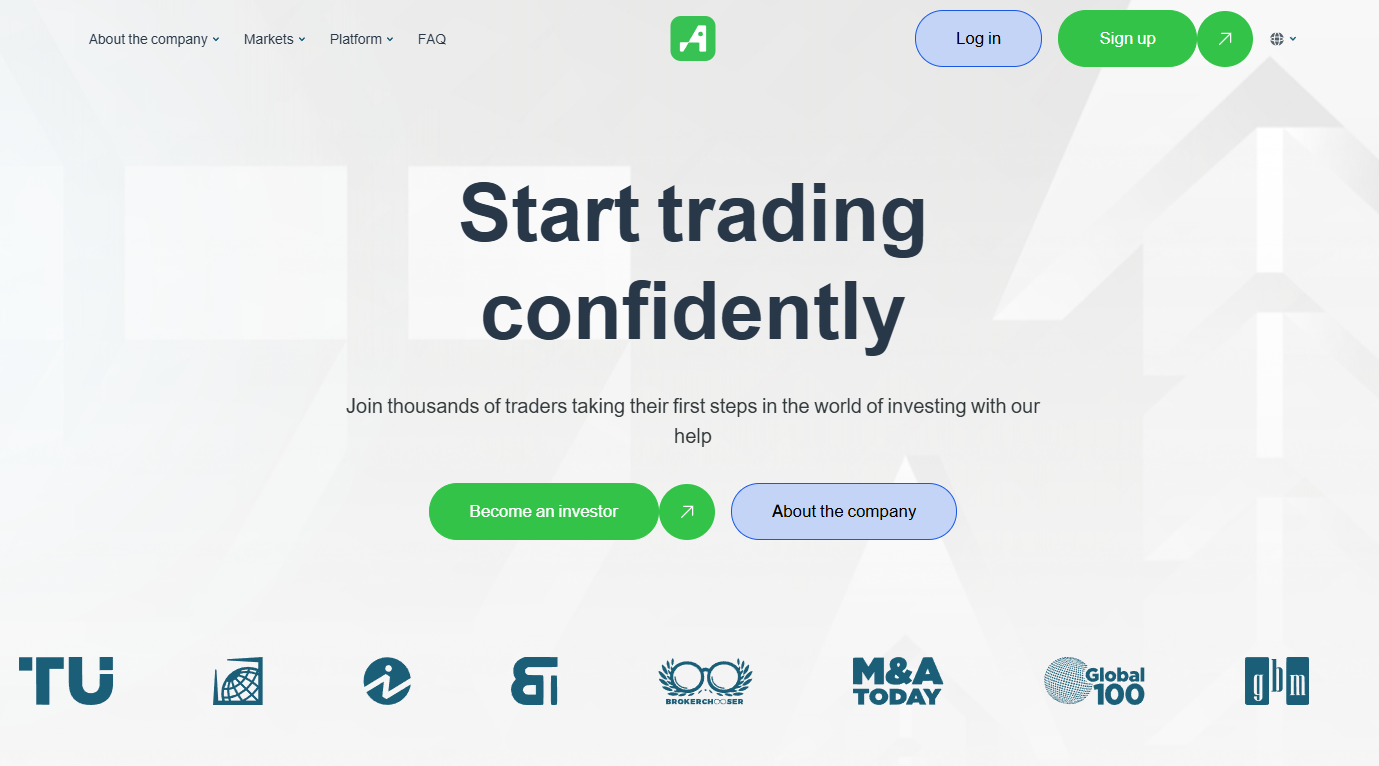
Antliasat states that it has been operating since 2017 and currently serves more than 116,000 traders worldwide. Such claims would normally be supported by a long-standing digital footprint, regulatory disclosures, or historical references in financial media.
In practice, the broker’s online presence tells a different story. Technical analysis of domain data shows that the primary website and related domains were registered only in late 2025. This short operational timeline directly contradicts the claimed founding date and makes the assertion of a large, established client base highly implausible.
Key inconsistencies include:
- Domains associated with Antliasat registered only in November 2025
- No archived evidence of the company operating prior to this period
- No historical references supporting the claim of operations since 2017
These discrepancies significantly undermine the credibility of the broker’s public narrative.
Corporate Registration and Jurisdiction
Antliasat claims to be registered in Argentina and provides a physical address in Buenos Aires. However, the broker does not disclose the legal name of the operating entity, its company registration number, or any official incorporation documents.
From a compliance perspective, this is a critical omission. Legitimate brokers are required to clearly identify the legal entity responsible for client funds and contractual obligations. In the case of Antliasat, there is no publicly verifiable evidence that a licensed financial intermediary operates under this name in Argentina.
As a result:
- Clients cannot verify the legal existence of the broker
- There is no identifiable jurisdictional authority overseeing its activities
- Legal accountability remains undefined
Regulatory Claims and Verification Failure
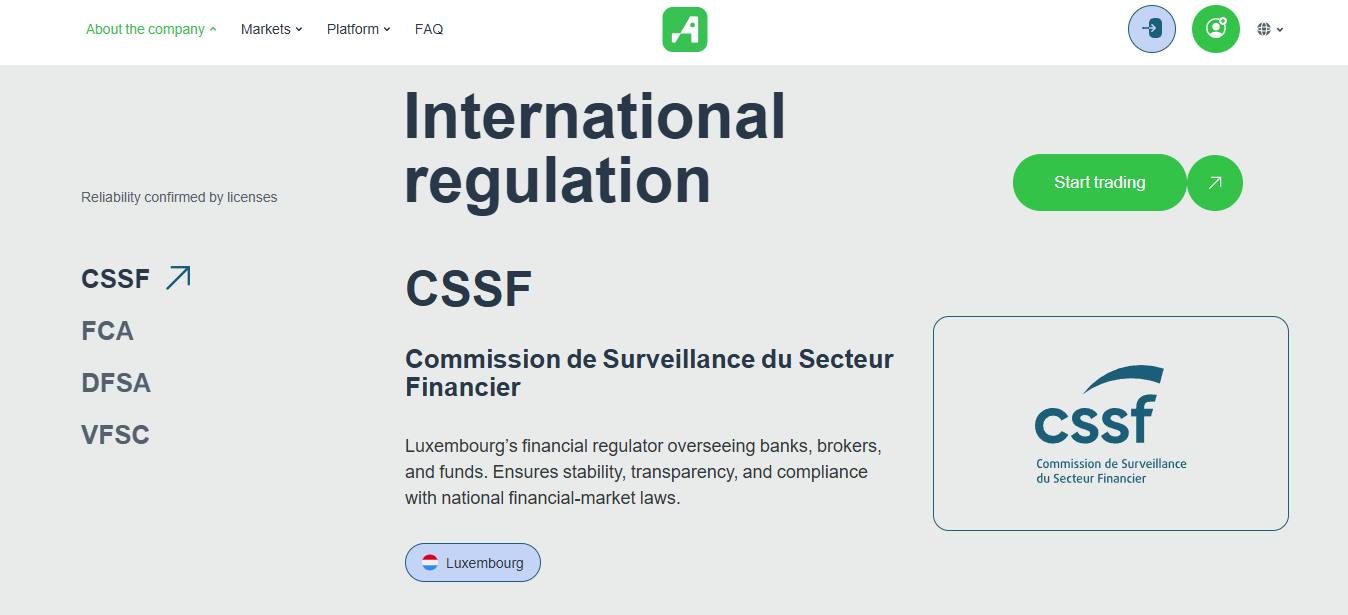
One of the most serious issues surrounding Antliasat is its claim of regulation by multiple international authorities, including the FCA, CSSF, DFSA, and VFSC. These regulators are frequently referenced in marketing materials to create an impression of legitimacy.
However, independent checks of the official registers maintained by these authorities show no licensed firm named Antliasat. The broker also fails to provide license numbers or direct links to regulatory records.
The following points are particularly concerning:
- None of the claimed regulators list Antliasat as an authorized entity
- No regulatory certificates or disclosures are published on the website
- Regulatory logos appear to be used without authorization
False claims of regulation represent a severe breach of financial transparency and are a common tactic used by fraudulent brokers to attract inexperienced traders.
Domain Network
Antliasat operates through multiple domains, including antliasat.com, antlia-sat.pro, and ant-sat.top. The use of several recently registered domains suggests a strategy designed to minimize exposure to complaints, blacklists, and regulatory scrutiny.
This approach contrasts sharply with legitimate brokers, which typically operate under a single, long-established domain supported by a stable corporate identity.
The domain structure indicates:
- A lack of long-term operational stability
- Possible rebranding or cloning of prior schemes
- Increased risk of sudden website shutdowns
Trading Platforms
Instead of offering established platforms such as MetaTrader 4 or MetaTrader 5, Antliasat promotes a proprietary web platform and a downloadable application called FinVector. No technical documentation is provided to explain how this software functions, how orders are executed, or whether pricing data reflects real market conditions.
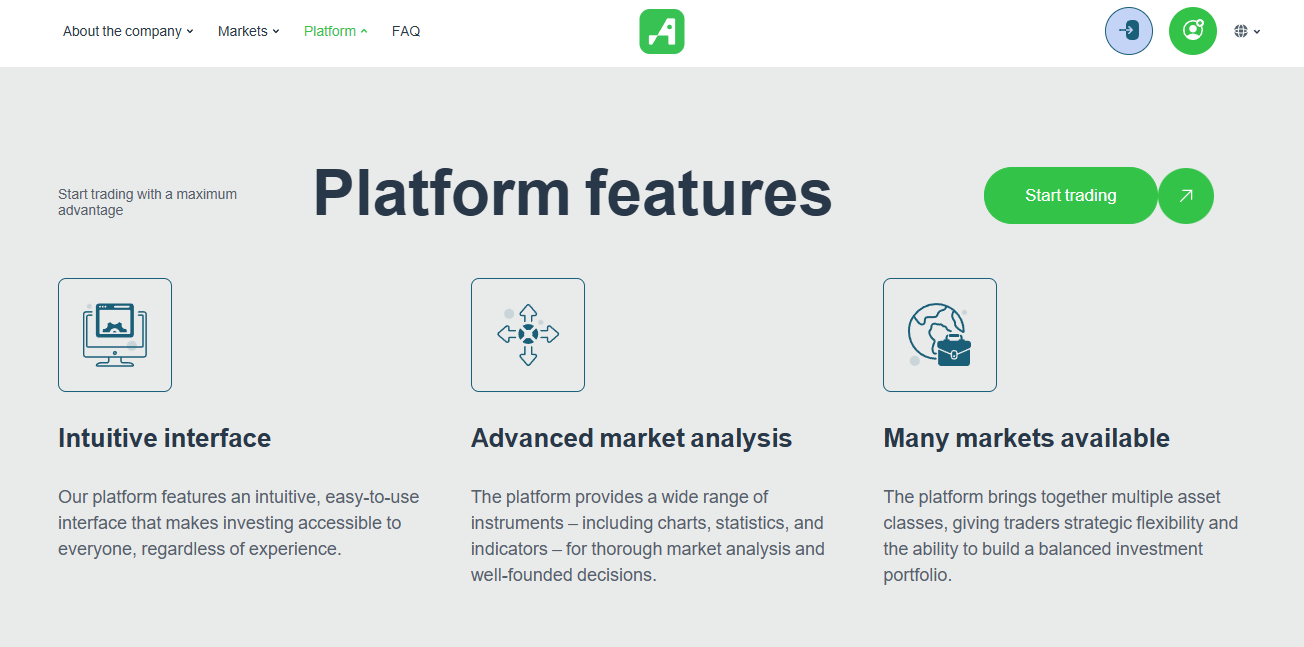
Users are expected to trust a closed system with no external verification. Reports of clients being encouraged to install this software on personal devices raise additional concerns regarding data security and potential misuse.
The absence of transparency means:
- Execution quality cannot be independently assessed
- Price manipulation cannot be ruled out
- Client data security remains uncertain
Trading Conditions and Account Structure
Antliasat advertises several account tiers based on deposit size, ranging from entry-level accounts to so-called premium accounts with personal consultants. Higher-tier accounts are marketed as offering improved trading conditions.
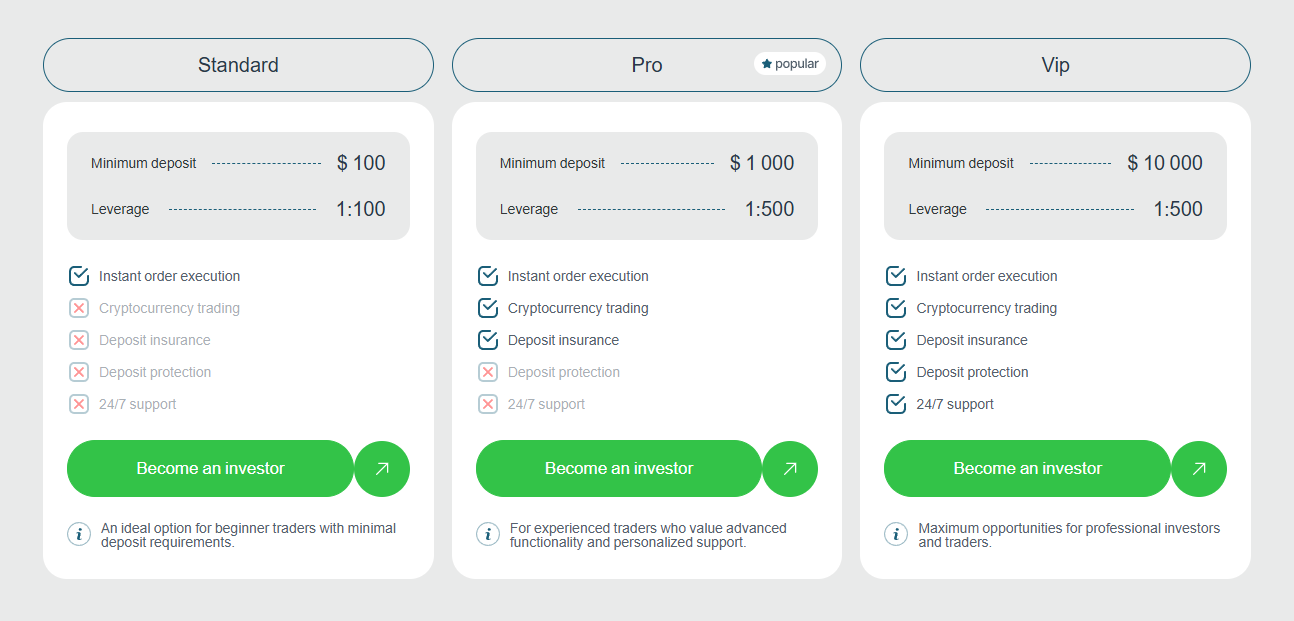
Key issues with these offerings include:
- Leverage of up to 1:500, which is prohibited in most regulated jurisdictions
- No disclosure of spreads, commissions, or execution models
- No clear explanation of how client orders are processed
Without these disclosures, traders cannot properly evaluate risk or trading costs.
Deposits, Withdrawals, and Financial Practices
Antliasat accepts deposits via bank cards and cryptocurrencies, yet it does not disclose any official broker bank accounts or confirm the use of segregated client funds. This lack of transparency creates uncertainty regarding the handling and safety of client money.
Withdrawal-related complaints form a consistent pattern. Users report that once a withdrawal request is submitted, they are informed that additional payments are required before funds can be released. These payments are often described as insurance fees, tax charges, or compliance-related costs.
Commonly reported issues include:
- Withdrawal requests blocked without clear justification
- Demands for additional payments exceeding the withdrawal amount
- Continued refusal to process withdrawals after fees are paid
Such practices have no legal basis in regulated brokerage operations.
Use of KYC
While Antliasat requires identity verification, the timing and application of KYC checks raise serious concerns. Verification procedures are frequently enforced only at the withdrawal stage, when clients attempt to access their funds.
This approach suggests that compliance requirements are being used to delay or prevent withdrawals rather than to meet regulatory obligations.
Client Feedback
Independent reviews and user feedback consistently describe a similar experience. Initial interactions may appear legitimate, with apparent account growth or positive results. Over time, clients are encouraged to increase deposits. Once withdrawal attempts are made, access to funds becomes restricted.
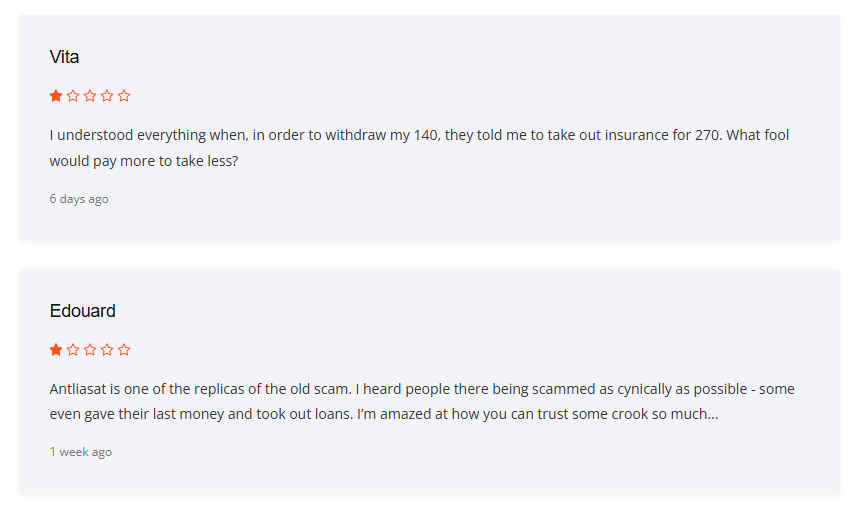
There is a notable absence of verified long-term success stories. Instead, many users describe Antliasat as a clone of older fraudulent brokerage operations, using similar scripts and pressure tactics.
Marketing Practices
Antliasat promotes itself through generalized claims of profitability, professional guidance, and accessible trading for all experience levels. These statements are not supported by audited performance data, regulatory oversight, or transparent risk disclosures.
In regulated markets, such marketing would be subject to strict compliance standards. In this case, it appears designed to create unrealistic expectations while obscuring actual risks.
Final Assessment
Antliasat exhibits a convergence of high-risk indicators that are commonly associated with fraudulent brokers. These include false regulatory claims, unverifiable corporate registration, recently established domain infrastructure, opaque trading software, unrealistic leverage offerings, and systematic obstruction of withdrawals through fabricated fees.
Taken together, these factors strongly suggest that Antliasat does not operate as a legitimate brokerage. Engagement with this platform presents a high risk of financial loss, with minimal prospects for recovery. From an analytical and compliance standpoint, Antliasat should be avoided.