

AlphaTrading Broker Review
AlphaTrading presents itself as an experienced international broker offering access to global financial markets, personalized service, and advanced trading solutions. Behind this façade, however, lies a project with no verified regulation, no transparent legal structure, and multiple red flags typical of pseudo-broker and investment fraud schemes.

This article provides a comprehensive and critical analysis of AlphaTrading based on publicly available information, platform behavior, and user complaints.
A Fabricated History and Unsupported Claims
AlphaTrading claims to have been operating since 2007, positioning itself as a company with long-standing market experience. There is no evidence to support this statement. No historical records, archived versions of the website, regulatory filings, financial statements, or reputable media mentions exist that confirm AlphaTrading’s presence prior to recent years.
Such claims of “long market history” without documentation are a standard tactic used by fraudulent brokers to artificially inflate credibility. In this case, the absence of any verifiable footprint strongly suggests that the stated founding date is purely fictional.
No Regulation, No Oversight, No Protection
One of the most critical issues with AlphaTrading is the complete lack of regulatory oversight. Although the company claims a U.S. presence and lists an address in New York, it is not licensed or registered with any recognized financial regulator, including the SEC, CFTC, or NFA. No license number, issuing authority, or supervisory body is disclosed anywhere on the website.
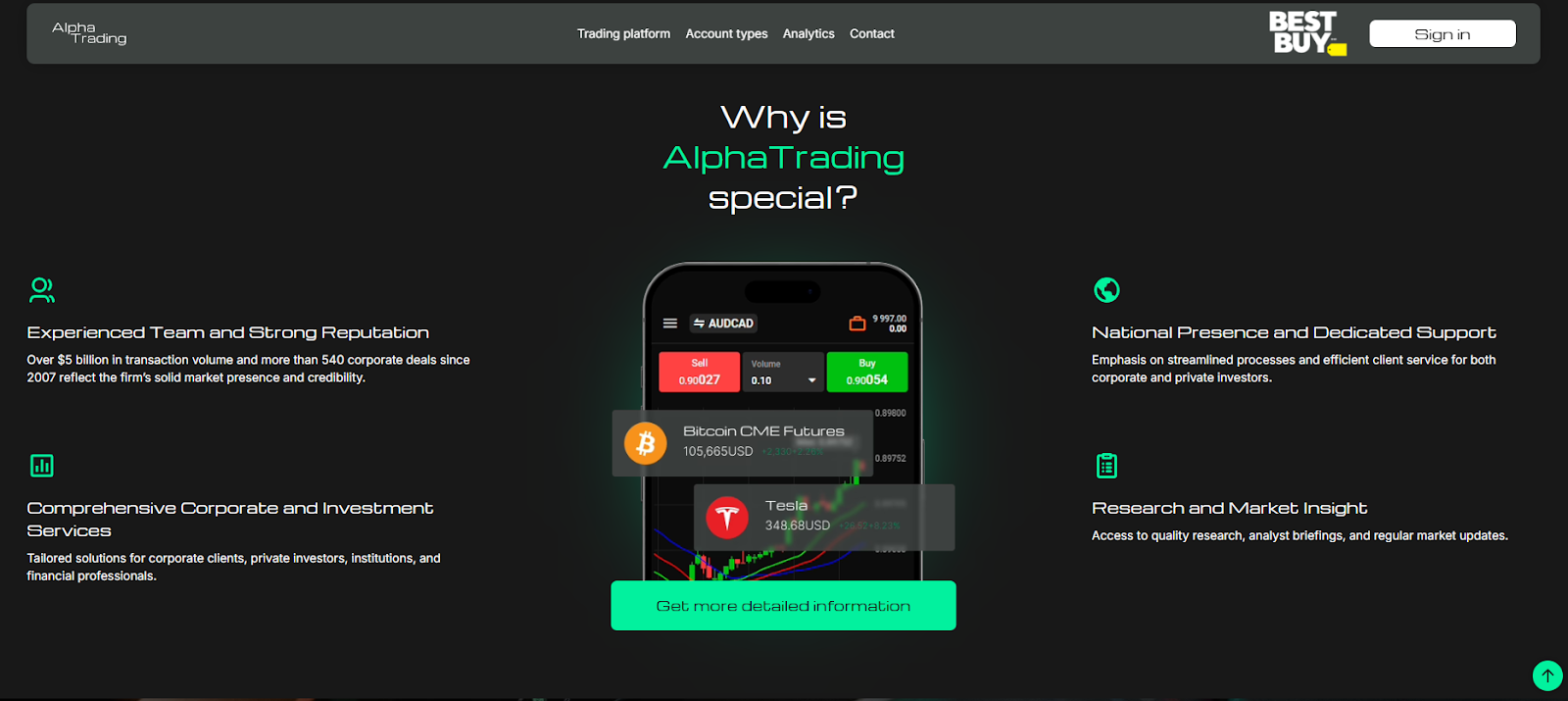
Statements about “regulatory compliance” appear only as vague marketing language and are not supported by any external verification. In practice, AlphaTrading operates as an unregulated broker, meaning client funds are not protected, disputes cannot be escalated to a regulator, and the company is not subject to audits or capital requirements.
The use of a prestigious jurisdiction like the United States without regulatory approval is a well-known method used to mislead inexperienced investors.
Legal and Corporate Opacity
AlphaTrading does not clearly disclose the legal entity behind the platform. There is no company name, registration number, country of incorporation, or information about owners and beneficial controllers. This legal vacuum makes it impossible for clients to understand who actually receives their money and under which laws the company operates.
In public corporate registries, entities with similar names have been found to be dissolved, a pattern frequently associated with short-lived legal shells used to distance operators from liability. Such structures allow projects to disappear or rebrand easily while leaving clients without any legal recourse.
Trading Platform Built for Control, Not Transparency
Instead of using industry-standard platforms such as MetaTrader 4 or MetaTrader 5, AlphaTrading relies on a proprietary trading system accessed through web, desktop, and mobile interfaces. The platform is hosted via third-party infrastructure under the core-tradeplatform.org domain.

This setup is particularly concerning. AlphaTrading provides no information about the software developer, liquidity providers, or order execution model. There is no confirmation that trades are routed to external markets, nor is there any explanation of whether execution is STP, ECN, or market-making.
Such proprietary platforms allow full internal control over pricing, execution, account balances, and trade outcomes. In practical terms, this means the broker can simulate trading activity, manipulate results, or intervene manually without the client’s knowledge. For the user, there is no reliable way to verify whether real market trading is taking place at all.
Account Types as a Sales Tool
AlphaTrading advertises several account tiers, including Standard, Pro, and VIP, each described with increasingly attractive conditions such as tighter spreads, lower or zero commissions, and access to personal analysts and trading signals.
However, these descriptions lack critical details. The company does not disclose minimum deposit requirements, leverage limits, contract specifications, margin call levels, or stop-out rules. This information is essential for assessing trading risk and is standard among legitimate brokers.
By withholding these parameters, AlphaTrading preserves the ability to alter conditions on a case-by-case basis, often during direct communication with sales managers. In practice, account tiers function less as transparent trading products and more as tools to pressure clients into depositing larger sums of money.
Withdrawals as the Primary Risk Zone
AlphaTrading states that it supports withdrawals via bank transfers, cryptocurrencies, and online payment systems. Beyond this general statement, no concrete information is provided. Fees, processing times, transaction limits, and refusal criteria are not published and reportedly become “available” only after registration and funding.
This lack of predefined rules is especially problematic. User complaints indicate that withdrawal requests are frequently delayed, subjected to additional payment demands, or blocked entirely under the pretext of internal compliance checks. In some cases, accounts are restricted or frozen without clear explanations.
This behavior follows a classic pseudo-broker pattern: deposits are accepted quickly and without friction, while withdrawals are obstructed through vague procedures and shifting requirements.
Marketing Over Service
AlphaTrading’s business model relies heavily on aggressive marketing rather than transparent brokerage services. Emphasis is placed on personal managers, exclusive VIP treatment, proprietary analytics, and trading signals. These elements are presented as value-added services but function primarily as psychological leverage.
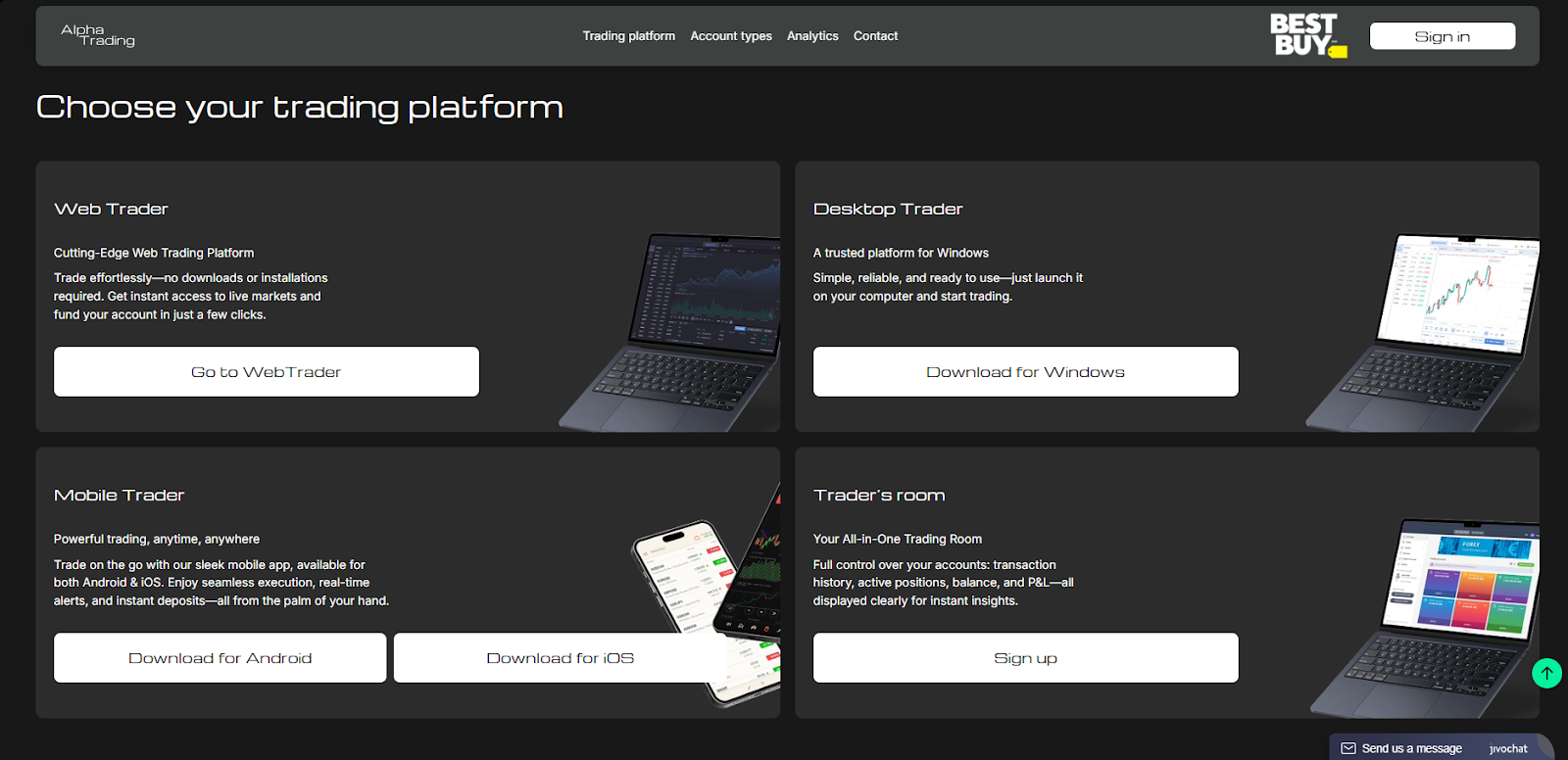
Clients are encouraged to increase deposits to unlock “better conditions” or “stronger signals,” while responsibility for trading outcomes is entirely shifted onto the user. The qualifications of analysts are undisclosed, and no accountability exists for the recommendations provided.
Rather than facilitating fair market access, the platform operates as a sales funnel designed to maximize deposits and retain client funds within a closed system.
Final Assessment
AlphaTrading exhibits all the hallmarks of a high-risk, unregulated pseudo-broker. The company operates without a license, hides its legal structure, uses a fully controlled proprietary trading platform, withholds critical trading conditions, and demonstrates withdrawal practices consistent with fraudulent schemes.
There is no evidence that AlphaTrading provides genuine brokerage services or real market access. Engagement with this platform exposes users to a substantial risk of financial loss with no realistic path to recovery or legal protection.
AlphaTrading should not be viewed as a legitimate broker but as a potentially fraudulent operation disguised as an investment platform.